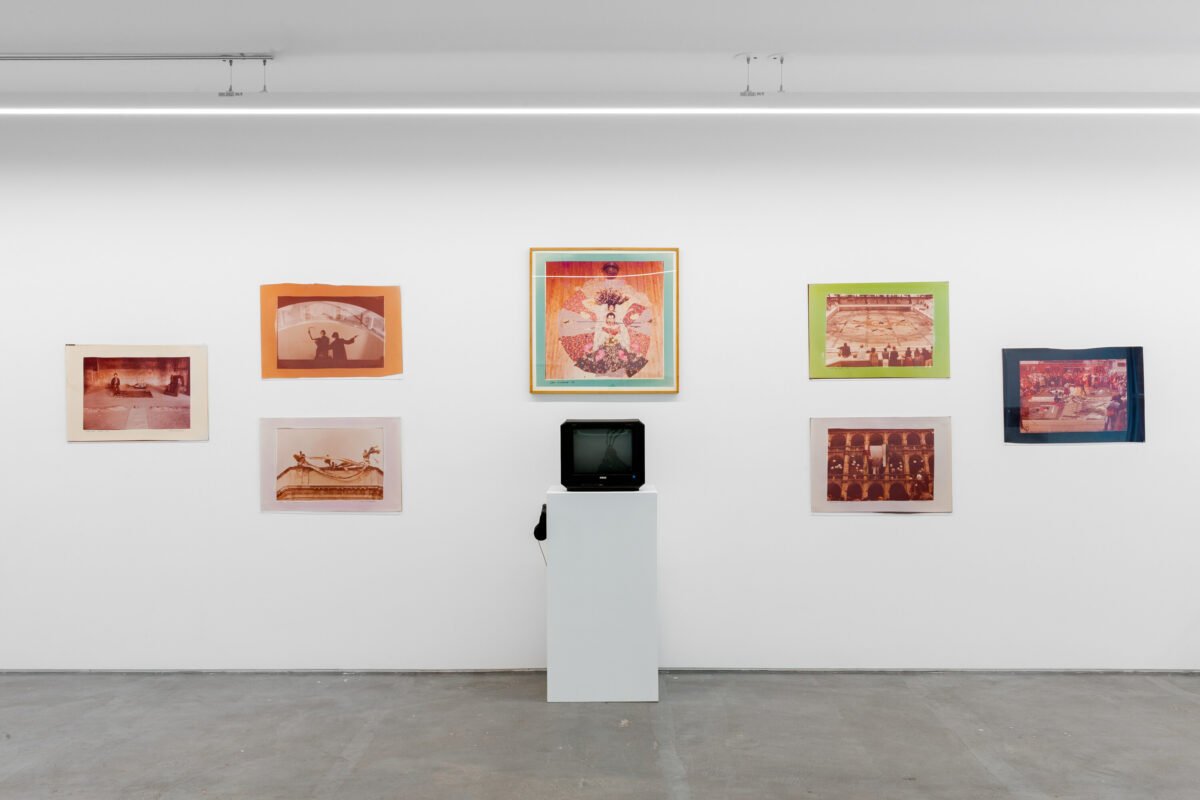
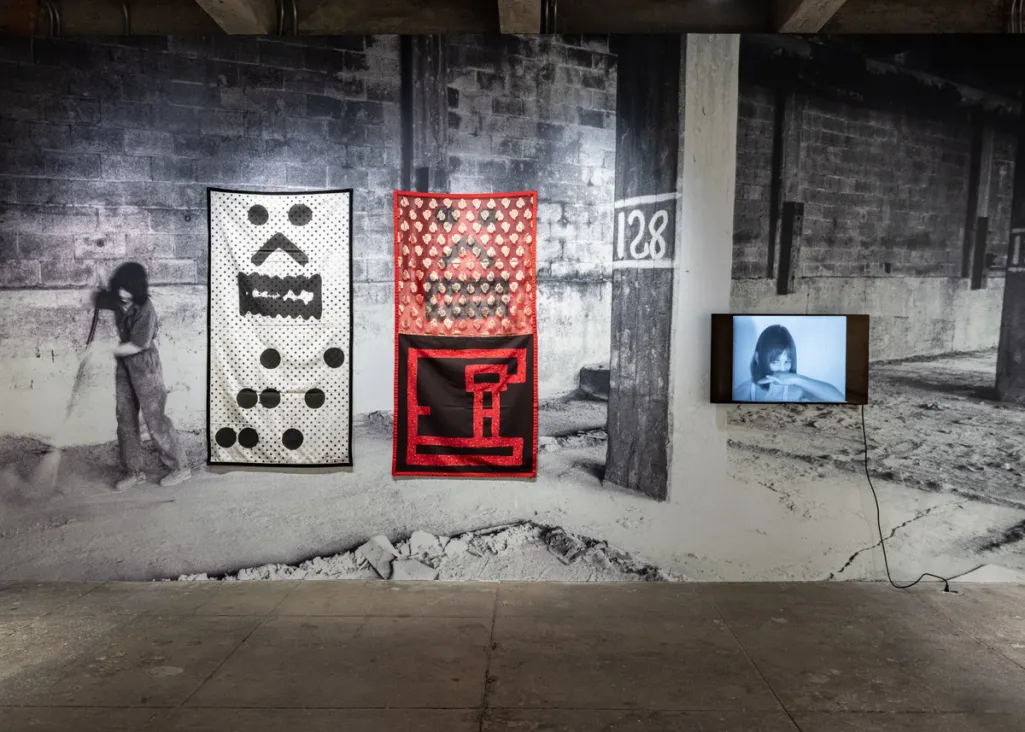
Tina Girouard SIGN-IN, 2025
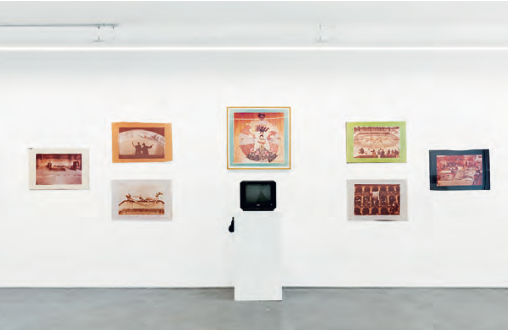
Museo Tamayo, Mexico City
About
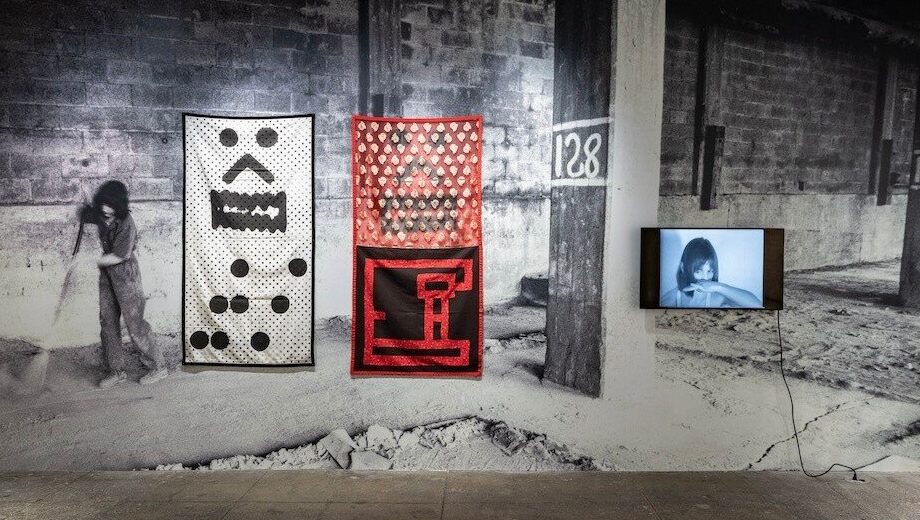
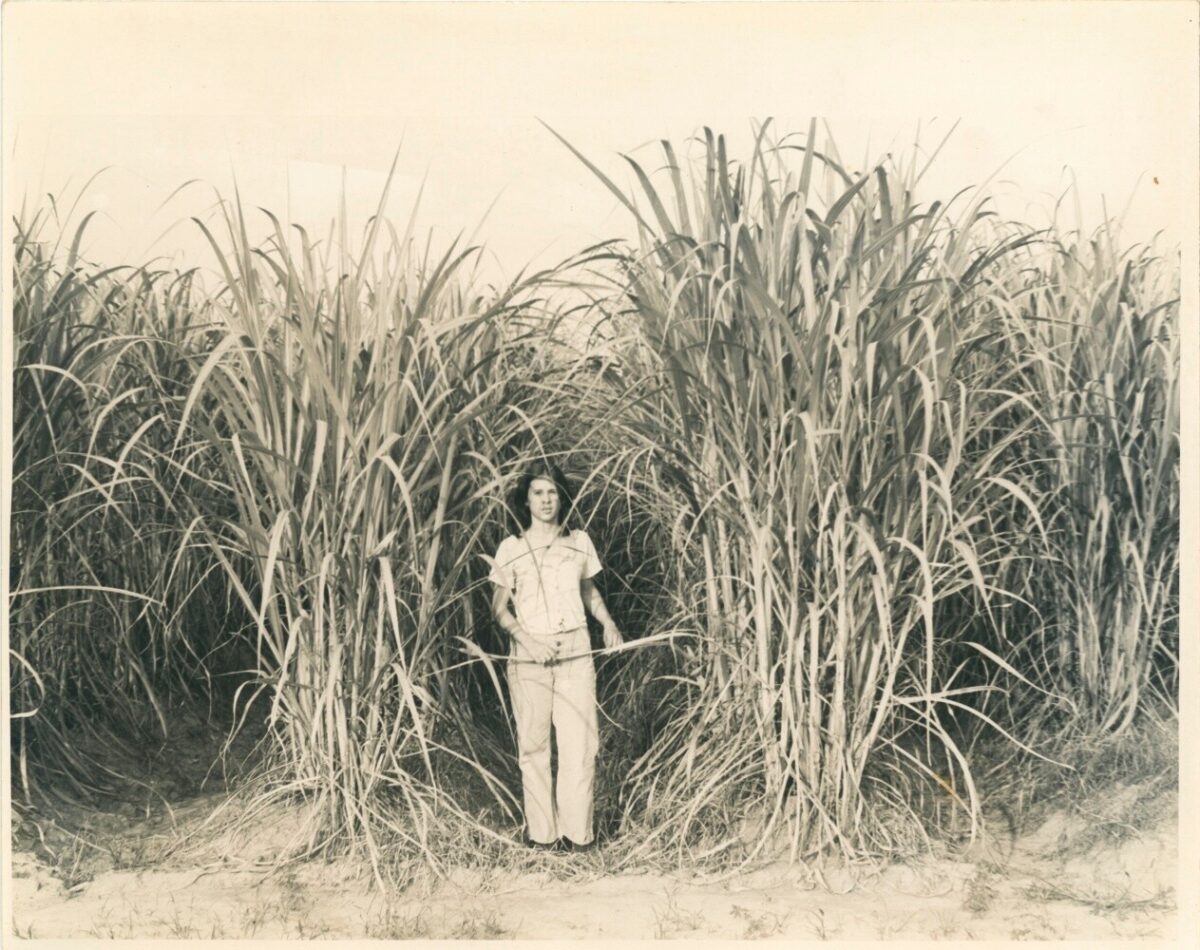
Moving between genres and geographies, Tina Girouard (1946 – 2020) invested objecthood with meaning through ritual, performance, role-playing, and community participation. From the 1970s until her death, she played a galvanizing role in the founding and development of a range of alternative art organizations, including the Anarchitecture Group, the interdisciplinary cohort of 112 Greene Street, FOOD restaurant, The Kitchen, P.S. 1, the Festival International de la Louisiane, and as a collaborator in artist communities in Louisiana, New York, and Haiti.
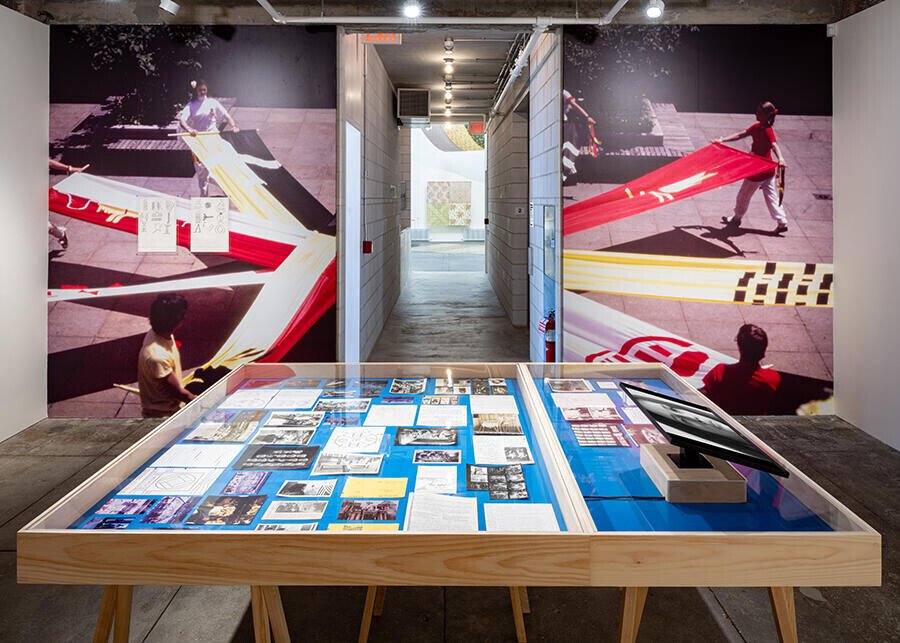
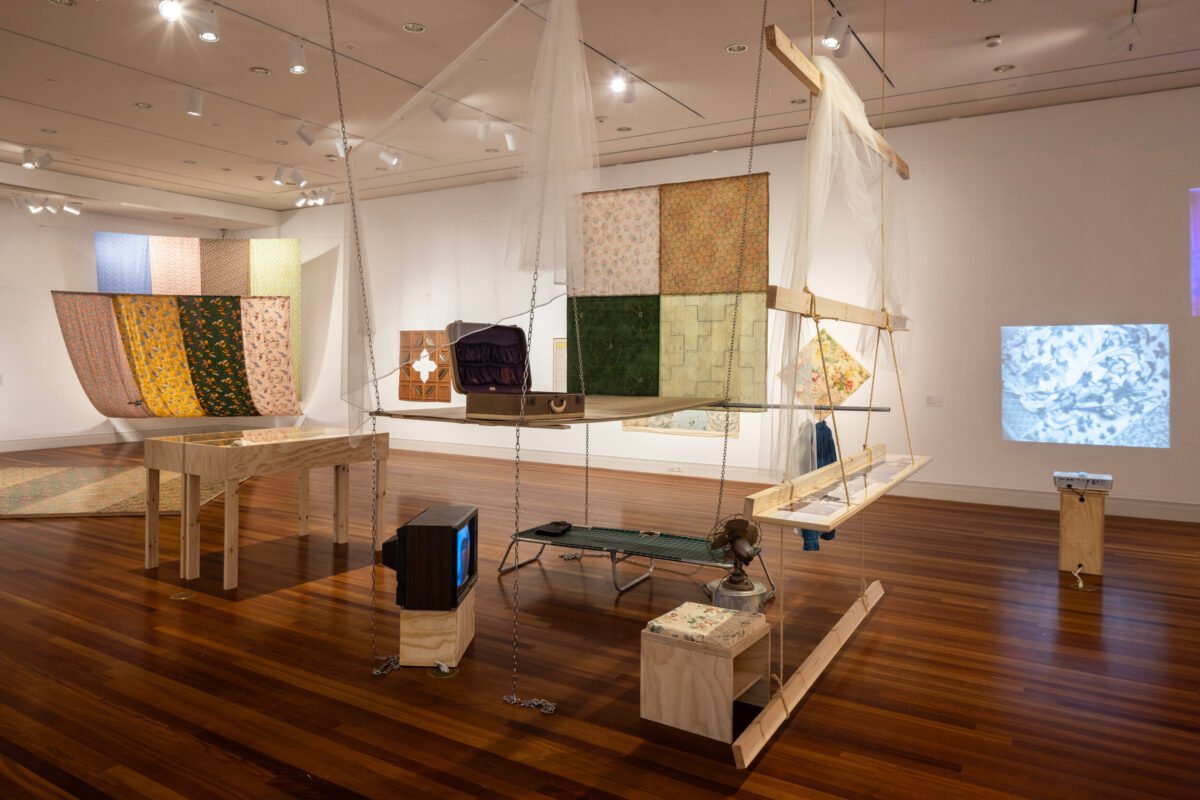
Girouard’s first comprehensive retrospective SIGN-IN opened at the Museo Rufino Tamayo in Mexico City in May 2025. After debuting at the Ogden Museum of Southern Art, New Orleans in 2024, the retrospective also travelled to the Center for Art, Research, and Alliances (CARA) in New York.
Girouard’s extensive exhibition history includes a 1983 mid-career survey mounted at the Museo Rufino Tamayo in Mexico City, and international events such as the 1980 Venice Biennale, the 1977 Paris Biennale, 1977 Documenta VI and 1972 Documenta V, Kassel. Her work has exhibited widely at galleries and museums including: Anat Ebgi, Los Angeles / New York, Leo Castelli Gallery, The Kitchen, Walker Art Center, New Orleans Museum of Art, Museum of Contemporary Art Chicago, Palais des Beaux-Arts Brussels, Holly Solomon Gallery, David Zwirner, the Museum of Contemporary Art Los Angeles, and the New Museum.
Girouard was featured in the exhibition With Pleasure: Pattern and Decoration in American Art 1972 – 1985 curated by Anna Katz, originating at MOCA Los Angeles, which traveled to the Hessel Museum of Art, Bard College, NY. Girouard’s work is in the permanent collections of the Hessel Museum of Art, Center for Curatorial Studies, Bard College, Annandale-on-Hudson, NY; Dallas Museum of Art, Dallas, TX; Institute of Contemporary Art, Miami, FL; Institute of Contemporary Art, University of Pennsylvania, Philadelphia, PA; Ludwig Forum fur International Kunst Aachen, DE; Rufino Tamayo Museum, Mexico City, Mexico; and Stedelijk Museum Actuele Kunst, Gent, Belgium.
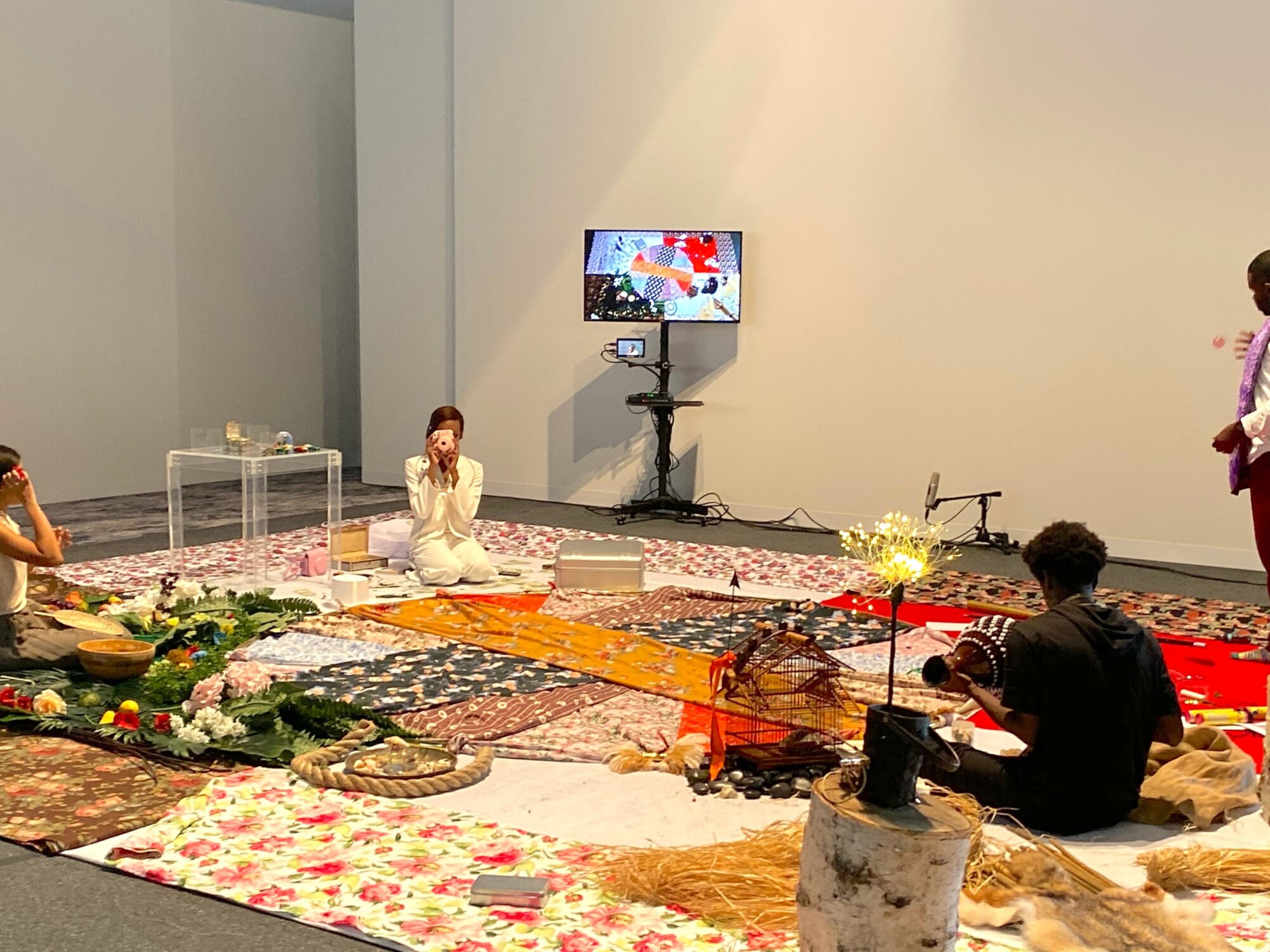
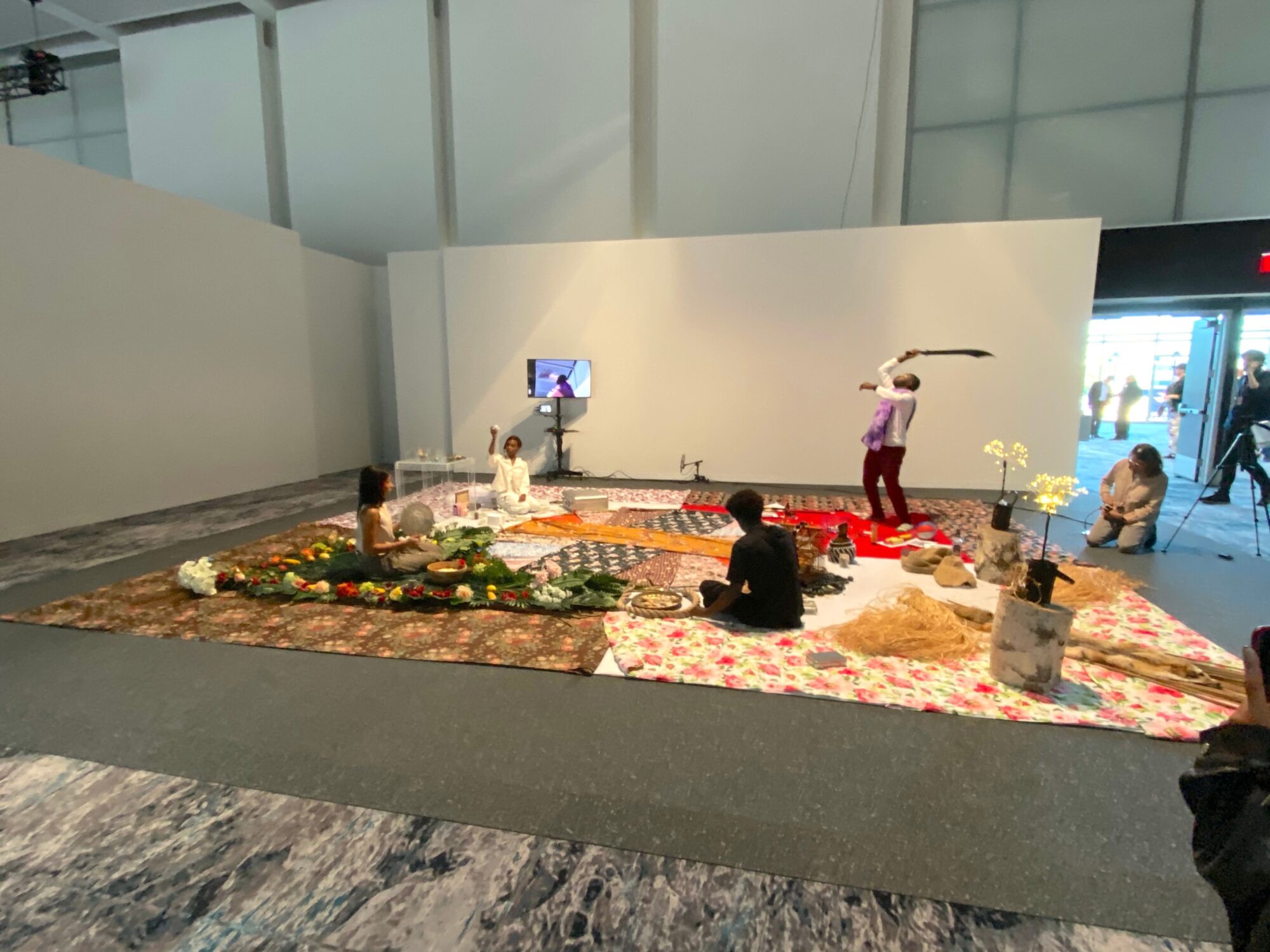
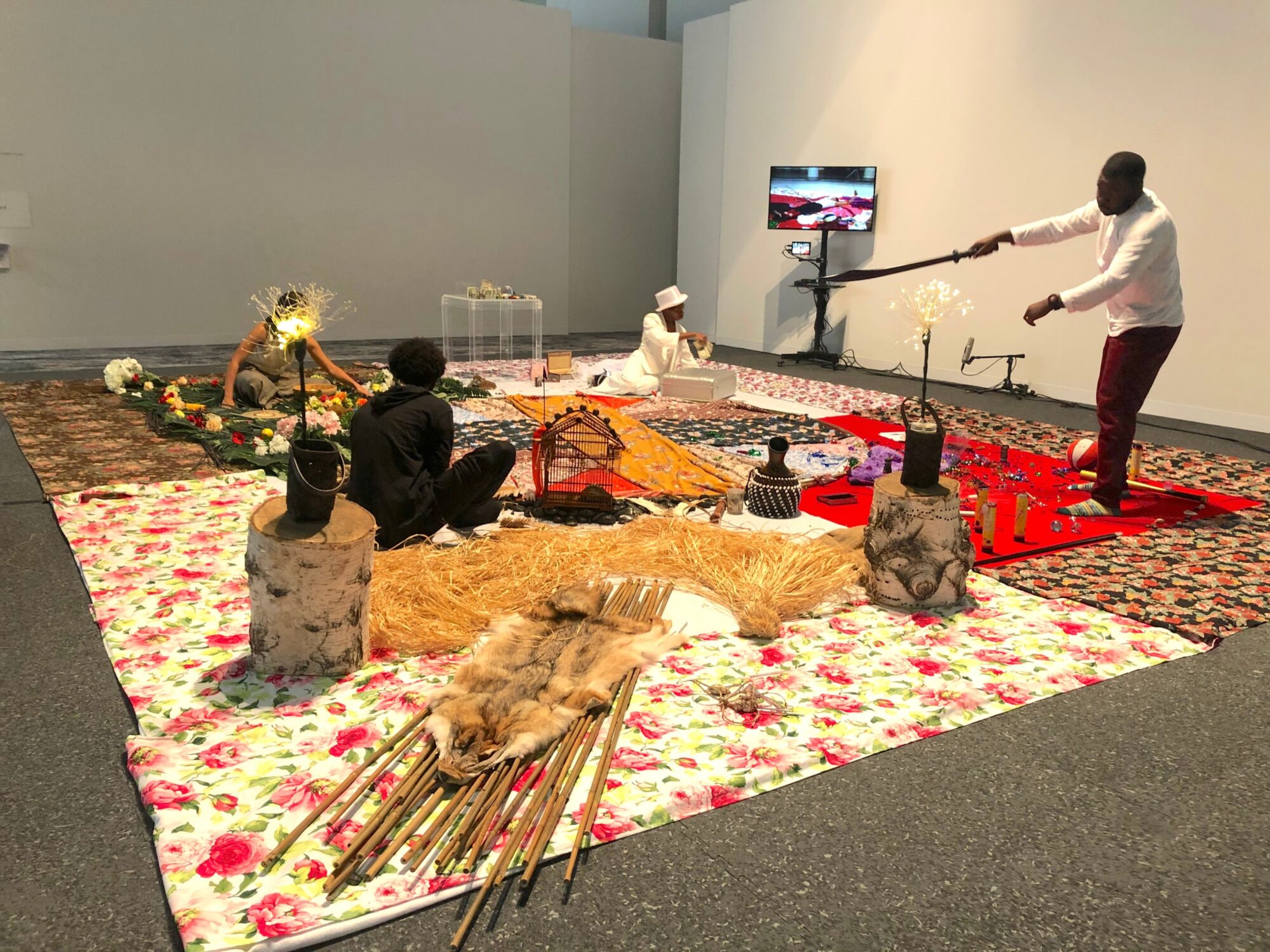
Since 2019, the artist Estate of Tina Girouard has been represented by Anat Ebgi. The gallery presented an historic restaging of her most important performancesPinwheel (1977) in curatorial partnership with Lumi Tan and The Kitchen, NYC for the inaugural Meridians sector at Art Basel Miami Beach. Following this in February 2020, A Place That Has No Name: Early Works, the first solo exhibition of her work in Los Angeles took place at Anat Ebgi, the last presentation of her work prior to her passing. In June 2025 the gallery will present a selection of 1970s works by Girouard in the Features Sector at Art Basel, Switzerland.
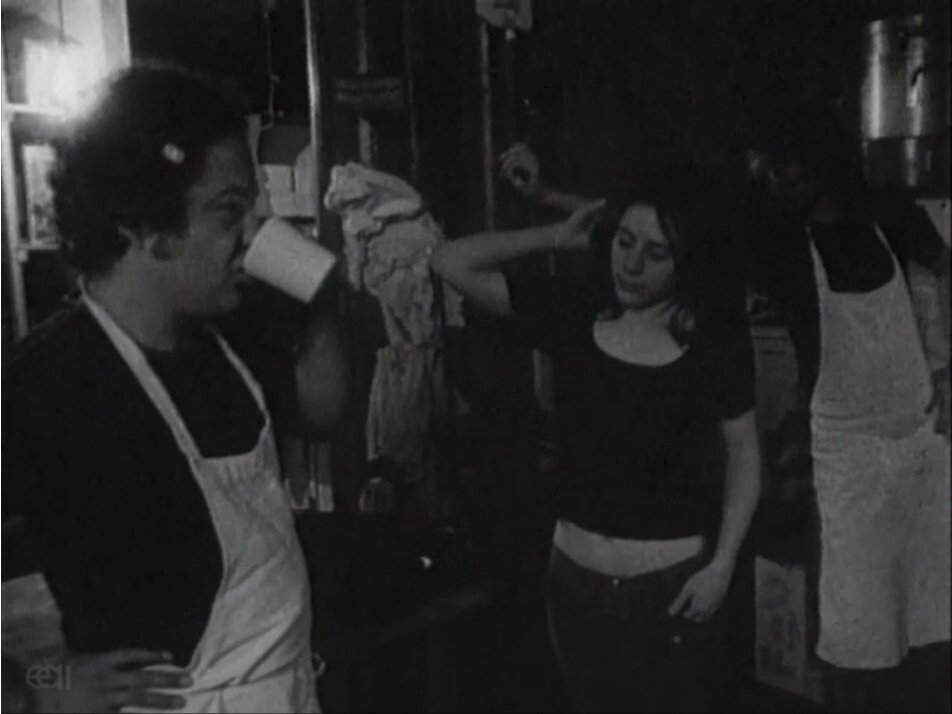
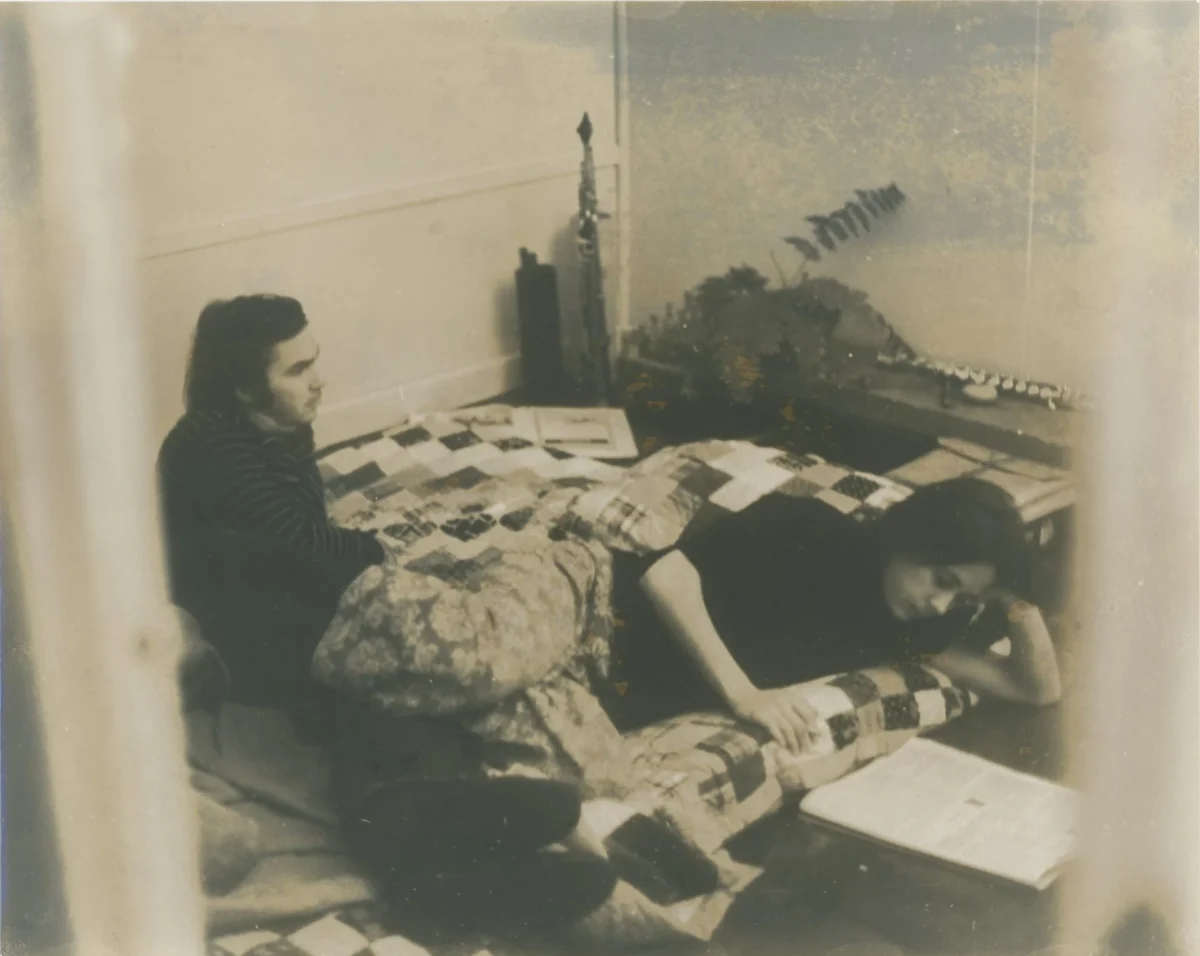
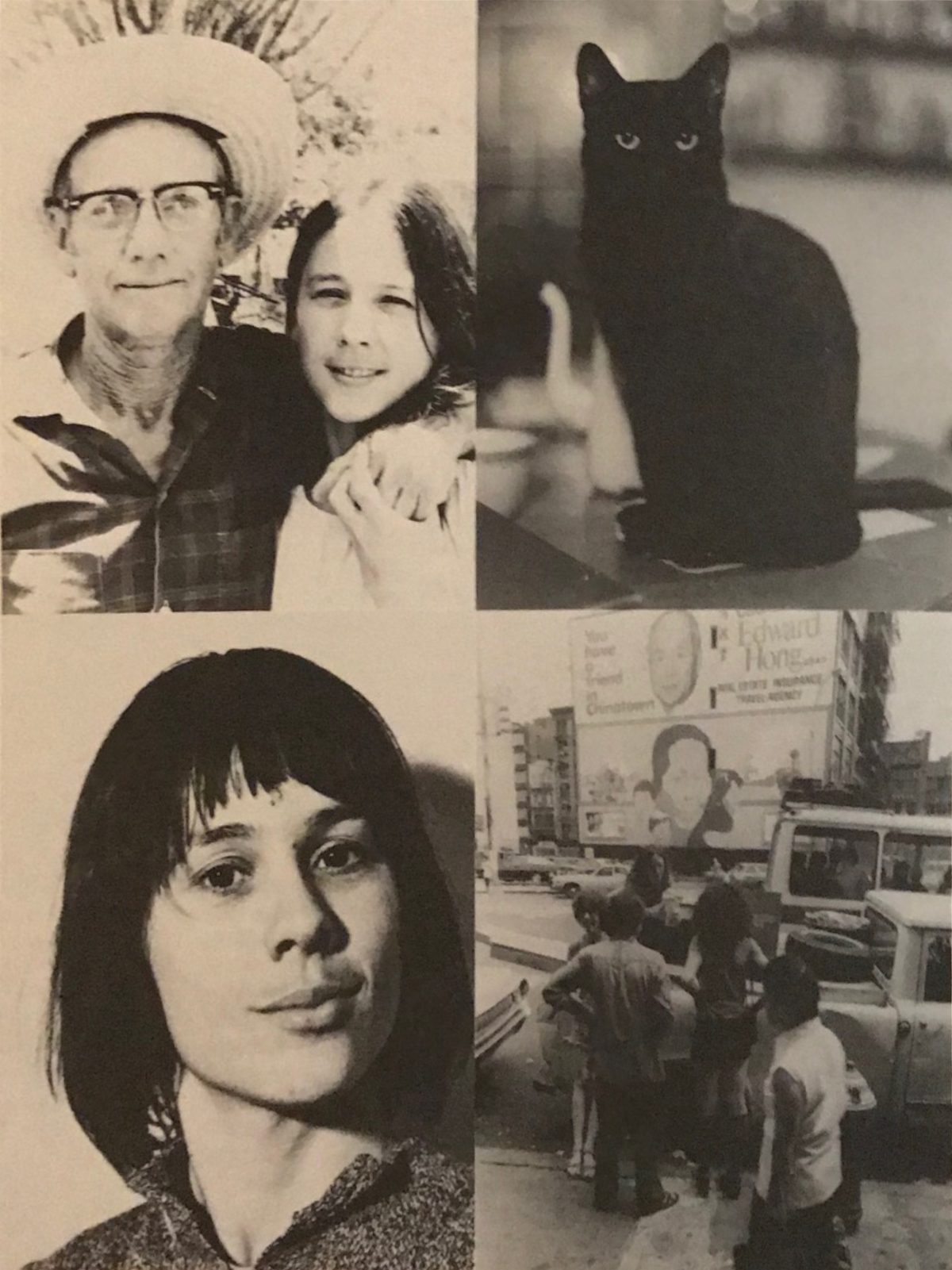
Tina Girouard, left, with Carol Goodden and Gordon Matta-Clark in front of Food, their artist-run restaurant at the corner of Prince and Wooster Streets in SoHo, 1971
Photo credit: Richard Landry, alteration by Gordon Matta-Clark, via David Zwirner, New York
Tina Girouard Walls Wallpaper II, 1974
Wallpaper mounted on muslin cheesecloth, and pencil, crayon, and wallpaper collage on paper
Dimensions variable
Frame 37" x 30" x 1 ¹⁄₂" [HxWxD] (93.98 x 76.2 x 3.81 cm)
Wallpaper 72 ¹⁄₂" x 70" [HxW] (184.15 x 177.8 cm)
Inventory #TG1106
Performance documentation of Tina Girouard Mass-Transit: Stosz Zeit, 1978, performed at Landhaushof, Graz, Austria for the Internationales Performance Festival
Tina Girouard 1992 Immigration - Migration 1492, 1992
Hand sewn glass beads, sequins, acrylic and other media on canvas
57" x 88" [HxW] (144.78 x 223.52 cm)
Inventory #TG1099
Ritual Maintenance: Edges and Encounters with Tina Girouard
The tension in Girouard’s work exists not because she made the unseen seen, but because her work articulates how ritual is not a result of something existing, but rather what brings it into being and keeps it in existence. — Diana SeoHyung
Girouard’s work recalls much of second-wave feminist art history with its performances of sweeping, washing, maintaining, or sewing, beading, crafting and working, and its use of ordinary materials—textiles, linoleums, wallpapers, sequins, found objects, vernacular language. But it is her prioritization of the social—as a builder, organizer, supporter and col- laborator—that seems most prescient (and necessary) today. – MJ Thompson
Holding Tina Girouard’s Archives | The River’s Institute
The archive is a stylized presentation of her practice—almost as if the archive is the work that happen to have three-dimensional objects out in the world supporting it. —Jade Flint
Manuela, a New Restaurant With a Museum-Quality Art Collection, Opens on Same Corner As Tina Girouard’s FOOD
They chose SoHo for its artistic roots: a few blocks away is Donald Judd’s studio on Spring Street, and once on the same intersection sat FOOD, the legendary artist-run restaurant by artists Tina Girouard, Carol Goodden and Gordon Matta-Clark in the 1970s. “It is known for its artistic history and heritage and that's very exciting to us,” says Artfarm creative director Bee Emmott. —Elise Taylor
You could ask how such an artist could have largely slipped out of the art historical canon. Because she’s a woman, of course. Because her work was so wide-ranging that it’s hard to pin her to a particular movement — Pattern & Decoration? Video art? I’m not so sure she would care. —Lisa Yin Zhang
Julia Bryan Wilson on Tina Girouard’s SIGN-IN at CARA
"Tina Girouard: SIGN-IN is an invigorating glimpse into the practice of an enigmatic figure whose commitment to “lifemaking” means that her art is sometimes barely recognizable as such. —Julia Bryan Wilson
Tina Girouard Helped Make SoHo a Scene. Now, Her Legacy Emerges from Obscurity
The work of cementing her long-term legacy began while Girouard was still alive, with Anat Ebgi presenting her last show before her death at its Los Angeles location in 2020. —Sarah Cascone
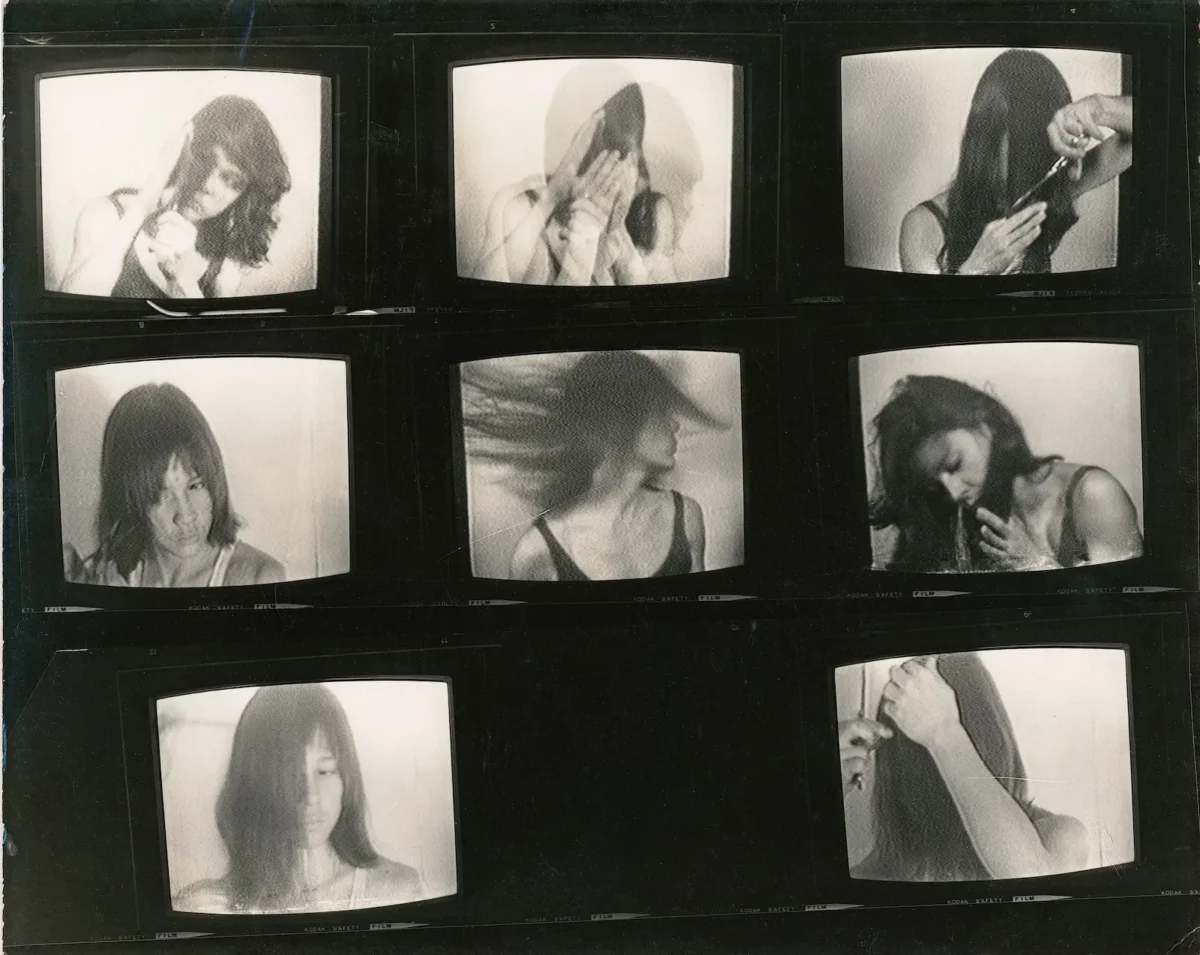
Girouard understood her most valuable resource was her relationships to people, and this is what we can – and also cannot really – see in her exhibition. In one of the last videos in the exhibition, Maintenance III: Sewing, Washing, Wringing, Rinsing, Folding Solomon’s Lot (1973), tightly framed shots show the artist washing the fabric. Sometimes the pattern disappears and reappears, lost in the swirls of its own maintenance. As ‘Long Train Runnin’ (1973) by the Doobie Brothers plays over the radio, we watch Girouard knead her social fabric, making it new over and over again. —Simon Wu
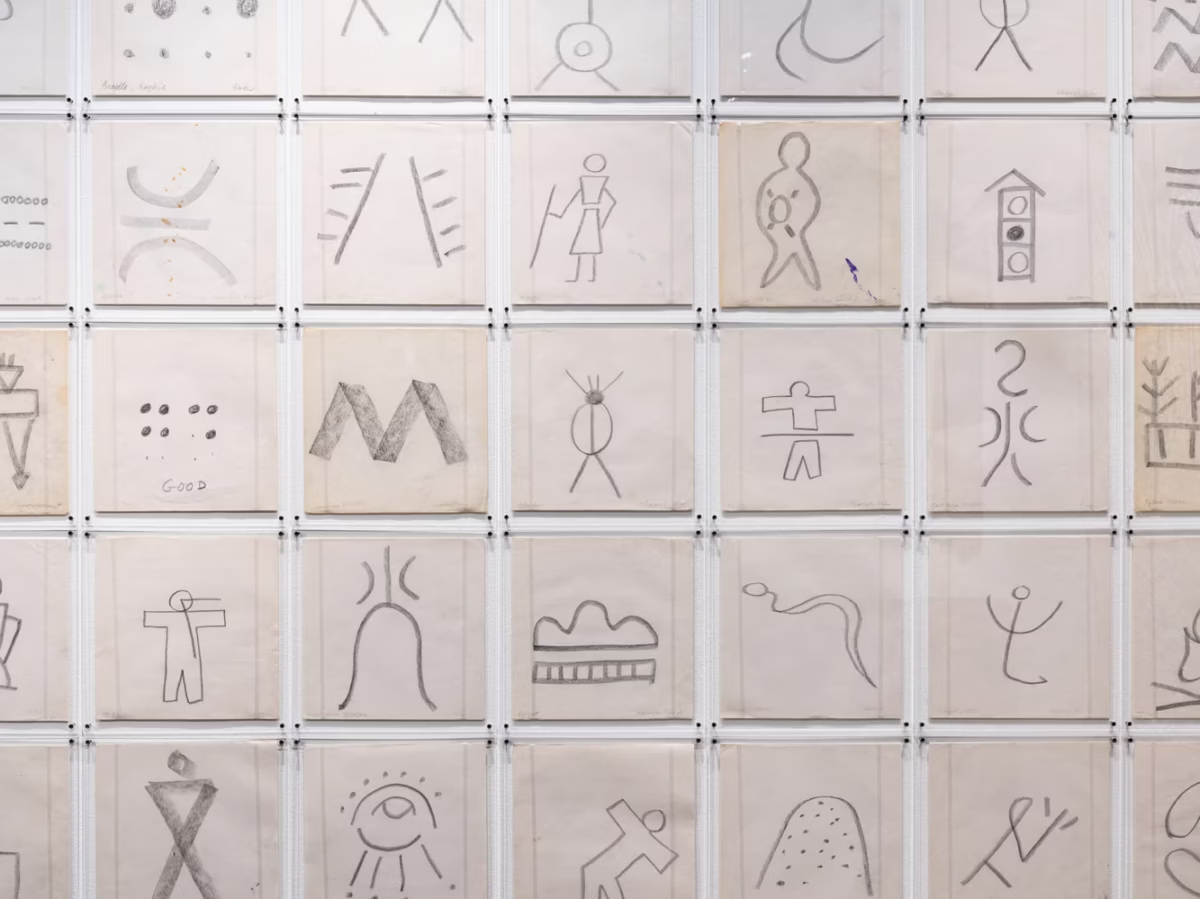
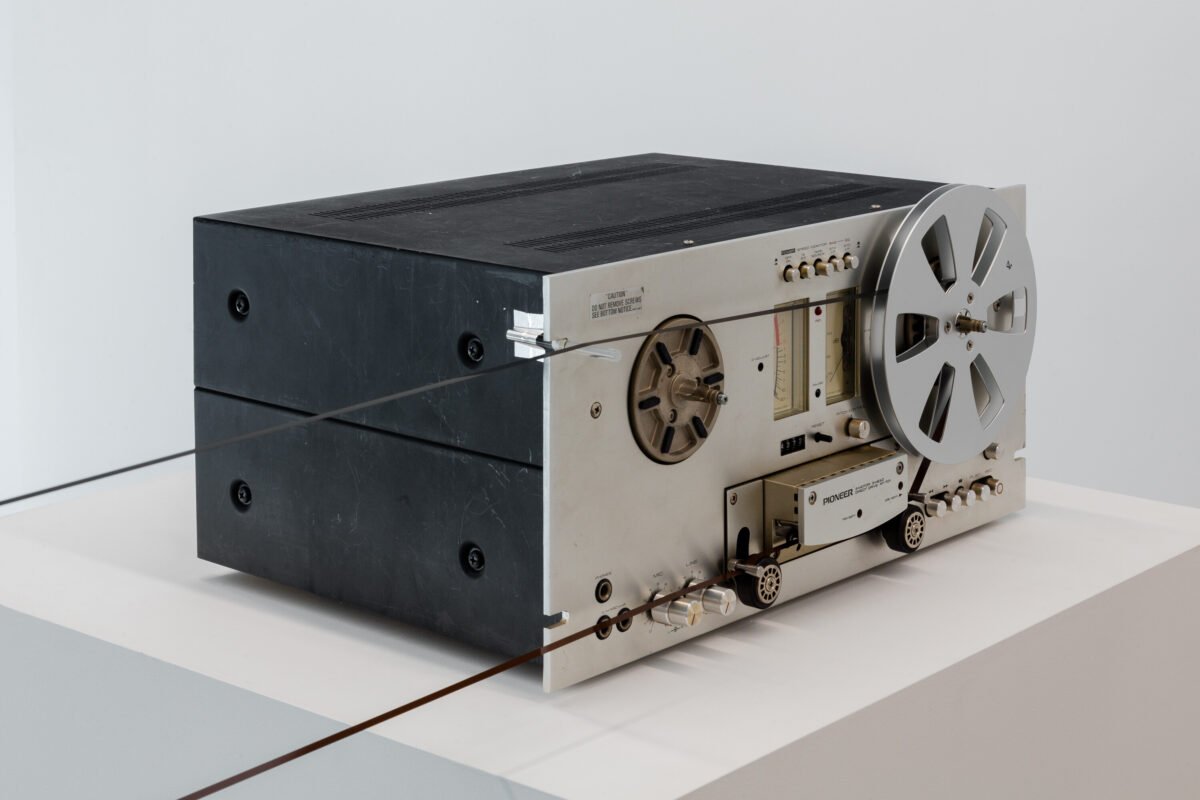
Girouard loved to cook, for and with others. In that spirit, the performers that are restaging key performances at Anat Egbi add their own ingredients. On October 5th, Erin Leland performed Sound Loop, from 1970. Girouard’s instructions have the performer counting off the numbers one through ten with long intervals in between and in the same manner constructing the sentence, ‘I want you to have a good time’. Each spoken word or number is recorded and played back in a sound loop that grows increasingly discordant as the ambient sound in the room is magnified with each added loop. Leland added her own element, simultaneously sketching the audience on a pad she couldn’t see, on an easel in front of her. The last performance will be by Ken Castaneda on Saturday, October 12, at 11 am. —Adam Simon
This show, initiated by the Rivers Institute for Contemporary Art & Thought and first presented earlier this year at the Ogden, stitches back Girouard's full story. —Siddhartha Mitter
The Best New York Exhibitions this July | Mama’s in the Kitchen at Anat Ebgi
The show delves into the power that comes with domestic labor and care, acts that have often been rejected by modern culture. Each artist explores the power that comes with the domestic sphere, from cultural connections to community growth. Through mediums like epoxy clay bread sculptures and acrylic and oil narrative paintings, the exhibition offers a compelling glimpse into how each artist interprets the complexities of domestic life today. Throughout “Mama’s in the Kitchen,” each artist unapologetically represents their own visions of home and its empowering nature–viewers are met with dynamic and thought-provoking pieces at every turn. —Harriet Engelke
"Well, I like people, and I like working with large groups of people. I don’t like seasoned performers; I much prefer to work with people who are naïve about performance, and who look on what I’m doing as a celebration of themselves or their ego or whatever…. I try to make the experience really good for them, and meaningful to them individually. With Food and Chatham Square I had about 15 primary relationships going: I was living with seven and working with seven more. There wasn’t much time for anything else." —Tina Girouard
This is what sets the Louisiana-born Tina Girouard (1946–2020) apart from her contemporaries in the Anarchitecture group. Where others focused on material anarchy and disrupting the normative politics of urban spaces and private property, Girouard undertook the “women’s work” that underwrites this territory, illuminating everyday domestic chores such as cooking, cleaning, grooming, decorating, and homemaking as gendered performances via art. Domestic labor makes up the lives of most Cajun women in Louisiana, where Girouard was born, lived, and died. These works cleverly draw attention to the financial realities that underwrite both artmaking and women’s labor, invoking one of anarchitecture’s chief aims: to cut away from material excess, greed, and overconsumption by repurposing ready-made patterns and designs. Girouard does so in order to make home a place we’d want to return to, the site of a happily ever after. —Lauren Stroh
That Girouard’s performance work is finally being recognized in Louisiana is fitting. It’s also corrective. She returned to her home state permanently in 1978 following a studio fire in New York; in the years following Pinwheel, she moved toward works made of cloth, rather than performed with it. In the latter half of her life she was better known locally for textiles and graphic prints, the sort of seemingly anodyne art familiar to locals as décor from family doctors’ offices. Yet rather than proof of a downward trajectory from youthful experimentation to conservative middle and later works, these pieces were a logical continuation of Girouard’s investment in the Pattern and Decoration Movement she had helped galvanize, convinced that the borders between decorative and fine art are permeable. The Rivers Institute has done the painstaking work of reconstructing the timeline of Girouard’s performances, and has satisfyingly re-sited them in the context where they gestated. —Cat Kron
Norman Earle Fisher was born and raised in Jacksonville. He went to college at NYU, but returned and married a Jacksonville girl. In the spring of 1969, he met artists Richard “Dickie” Landry and Tina Girouard who would introduce him to the New York art world. —Chadd Scott
P&D’s long eclipse in mainstream art-historical narratives may explain not only the tenacious grip of formative interpretations but also the lack of in-depth, fine-grained studies of principals such as Girouard, who died last year and whose work commands increasing attention. Her distinctive mode of legitimating decorative practices involved the use of found lengths of vintage fabric, which she manipulated into provisional architectural structures for the performance of dance and ritual ceremonies. —Lynne Cooke
Highlights from ‘With Pleasure: Pattern and Decoration in American Art 1972-1985’
This 27-minute projection zooms onto Girouard’s lap while she tends a group of floral fabrics which she inherited from her uncle, Sullivan. Throughout the video, she rinses, sews, and folds the materials while the radio in the background plays content that ranges from the time’s popular tunes, advertisement, and political updates. A song from Pink Floyd’s The Dark Side of The Moon album is followed by a car dealership advertisement, and we eventually hear the most recent development in the Watergate hearings. “That big ‘a-ha’ moment is critical about the movement’s queering of not only contemporary art but the broader authority,” says curator Anna Katz. —Osman Can Yerebakan
From playing a central part in New York's art scene, to wandering the 'Louisiana swamps and Voodoo societies in Haiti', Girouard was an artist who evolved wherever she went. —Tessa Moldan
What distinguished “A Place That Has No Name” was its subtle demonstration of how Girouard synthesized her conceptual and material interests through iteration and collaboration. —Tausif Noor
For Girouard, whose work at this time moved fluidly between installation and performance, to provide food and facilitate community was entirely consonant with her art and her cultural identity. —Jonathan Griffin
With Pleasure: Pattern and Decoration in American Art, 1972–1985
Made in the year between Nixon’s impeachment, reelection, and eventual resignation, and approaching the end of the Vietnam war, Girouard’s video is a subtle rumination on the cultivation of taste in culture (music) and a deep questioning of authority at the intersection of American culture and politics. Maintenance III meditates on a seemingly neutral act: as the artist listens to upbeat tunes on the radio, there is a subtle critical undertone pointing out that the radio, a symbol of mass media, is itself not neutral. —Olivia Gauthier
Tina inspires because she calls one to the challenge of living fully. With Tina, creative energy poured into every act of being human, of being alive, of being—cooking, eating, dancing, talking, making, laughing, crying, loving. —Jessamyn Fiore
A curator’s tribute to Louisiana-born artist Tina Girouard
Perhaps Tina, along with Antoine, Georges, and Edgar, and all others involved in the production of the Vodou flags within the Bondye: Between and Beyond exhibition, were not only collaboratively creating work that honored spirits within the Vodou religion but also using the works and their production as a figurative mirror to explore the essence of each other’s humanity. —Nic Aziz
Tina Girouard, Experimental Artist in 1970s SoHo, Dies at 73
Tina Girouard, a risk-taking artist from rural Louisiana who played a catalytic role in the 1970s SoHo art scene in New York, helping to found the experimental gallery 112 Greene Street and the artist-run restaurant Food, died on April 21 at her home in Cecilia, La. She was 73. —Randy Kennedy
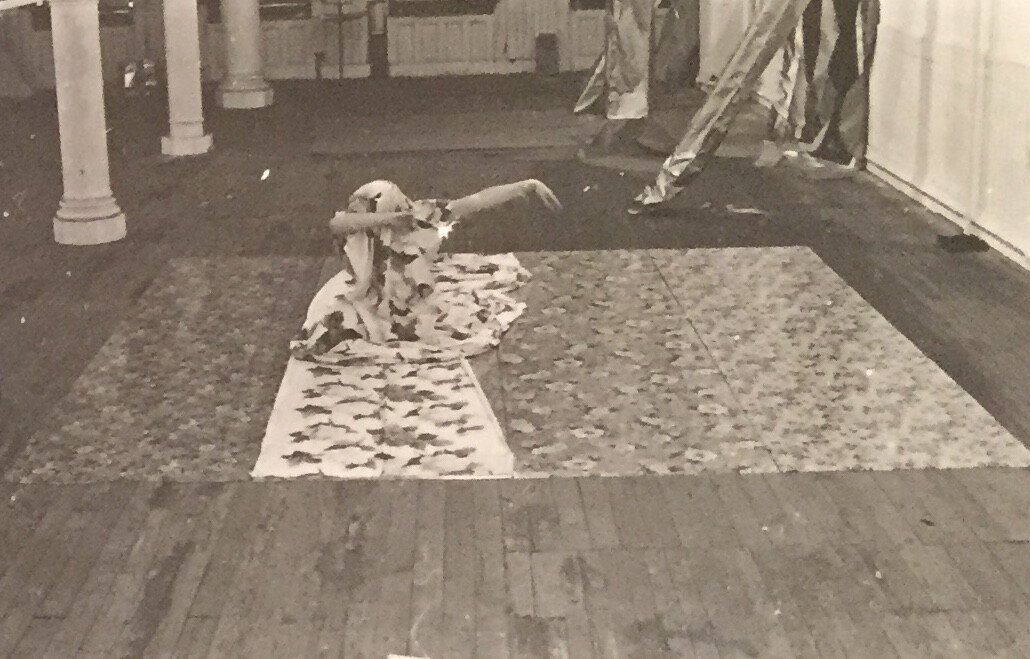
A pivotal figure in the 1970s SoHo art scene and its alternative spaces—such as 112 Greene Street and the restaurant FOOD—Girouard’s work included performances such as Pinwheel, 1977, in which the artist acted as both director and performer.
Tina Girouard was born in DeQuincy, Louisiana, in 1946. In the 1960s and 70s, she maintained a studio in New York’s Chinatown and actively participated in some of the earliest shows of video and performance art at now iconic independent spaces still operating today: 112 Greene St. (now White Columns), the Clocktower, PS1, Creative Time, Performance Art, and the Fabric Workshop in Philadelphia. —Daniel Fuller
Tina Girouard, Freewheeling Artist of 1970s New York Scene, Is Dead at 73
Alongside her art stretching across multiple mediums and movements, she helped nurture the New York art community by supporting various significant alternative art spaces. —Alex Greenberger
Whitewall, Anat Ebgi, and The Kitchen Celebrate Tina Girouard at The Miami Beach Edition
This week during Art Basel in Miami Beach, The Miami Beach Edition hosted cocktails and dinner to honor Tina Girouard‘s seminal performance piece Pinwheel at Art Basel’s brand new sector. Girouard is an American performance and video artist best known as part of the post-minimalist movement in downtown New York in the 60’s and 70’s. —Whitewall
Review: More is more. Why the ‘Pattern and Decoration’ show at MOCA is pure pleasure
Lurking within Girouard’s example is a salient feature of P&D and its awkward history. Domestic materials evoke a traditionally female purview. —Christopher Knight
Tina Girouard doesn’t disappoint. Inspired by the blend of Caribbean, African, and European culture in her own Louisiana hometown, these flags reference a range of international traditions expressed in Vodou, from All Saints Day in France to New Orleans Mardi Gras, and Haitian Kanaval. —Elizabeth Kozlowski
When Tina Girouard first arrived in Haiti, she began commissioning artists to create beadworks based on her own paintings and designs. As she learned more about the island nation’s art and religion—and developed close, collaborative relationships with Haitian artists. She began introducing more and more Haitian imagery into her work. —Arts & Food
To Judd’s industrially fabricated units, artists such as Tina Girouard offer equally rectilinear strips of commercially available wallpaper, floral-printed and pastel-hued, mounted on muslin as a kind of incidental painting. —Amy Sherlock
During extended visits to her studio in Haiti, where she worked with legendary Voodoo flag makers such as Edgar Jean-Louis and Georges Valris, Girouard fashioned the large beaded and sequined "Vodou drapos" in this expo at the New Orleans Museum of Art. While mostly remaining true to traditional Haitian symbolism, they reveal Louisiana influences as well. —D. Eric Bookhardt
Close Look: Tina Girouard at the New Orleans Museum of Art
During the 1990s, Girouard maintained a studio in Port-au-Prince where she helped create these collective artworks. She has favored exhibiting outside of the gallery system, championing non profits and more community centric spaces. She is also unique in that her work — video, sound, textile, painting, installations — are well represented in private collections of artists, as well as major museums. —Burnaway
The sequin works made by Tina Girouard are the fruit of several years of collaboration with the Bel Air artists in Haiti. But the works created during her stay there undeniably carry the mark of the artist. In return, her influence on the artists of Bel Air had the effect of promoting their personal style, as well as encouraging them to sign their work and to deploy the use of sequin art beyond its original function, which was to create sacred ceremonial flags... —LeGrace Benson
Gordon Matta-Clark, Suzanne Harris, and Tina Girouard: The 112 Greene Street Years
Tina Girouard’s colorful installations, constructed from panels of wallpaper, linoleum, and fabric, are scattered throughout the gallery’s exhibition areas. Designed to demarcate smaller spaces inside the vast industrial expanse of 112 Greene Street, these works were also intended to evolve as performance artists interacted with them. —Chase Martin
“Gordon Matta-Clark, Suzanne Harris, Tina Girouard: 112 Greene Street Years”
Tina Girouard’s linoleum floor piece and fabric screens combine ornamental floral patterns with a Minimalist compositional logic that feels almost more than contemporary, despite the fact that their motifs have an air of the anachronistic about them, evocative of early-twentieth-century wallpaper and the Victorian-era art of pressed flowers. —Zachary Cahill
In 1971, you didn’t have to be Keith McNally to open a restaurant downtown. "We were all doing it," recalled Girouard, then well known in downtown circles for her Chatham Square loft parties, because we wanted to FOOD was fueled by artists’ desires. —Howie Kahn
Vito Acconci locked himself in a tiny room with a fighting cock (“Combination,” 1971), which escaped, and had to be trapped by Girouard — whose own piece “Four Stages” (1972) was used as a frame for Mabou Mines performances. —Frances Richard
Anything but Decorative: Robert Gordy and Tina Girouard
Girouard has claimed in an interview that the word “decoration” rarely emerged within the movement itself; the artists of the time thought of themselves as being interested chiefly in patterning. “We were all activists,” she said. “We were just expressing our ideas and our beliefs with whatever materials we could.” —Benjamin Morris
Girouard replaced minimalism’s hard edges with soft sinewy fabric and symbolic content as we see in her large Conflicting Evidence tapestry. A seasoned performance artist, she also collaborated with Laurie Anderson, Philip Glass and many others who were part and parcel of her exotically patterned life. —Eric Bookhardt
The field and the table: Rosalind Krauss’s ‘expanded field’ and the Anarchitecture group
"Each person [Anarchitecture member] had his own area of interest. I was interested in the idea of psychological scale in architecture.." —Tina Girouard
Girouard’s four-panel canopy of flowered fabrics, Air Space Stage, 1972, and matching floor-work, Lie-No, 1973, consisting of four lengths of flowered linoleum, begged to be activated by live bodies, though it wasn’t clear how. —Frances Richard
Among the high points of Girouard's exhibition history were invitations to international events such as Dokumenta 6 in Germany, the Venice Biennial, Paris Biennial and in 1983, a midcareer retrospective mounted at the Rufino Tamayo Museum in Mexico City. Albert Raurell, the museum's director, opened the exhibition catalogue with this remark, "Tina Girouard es una artista para los artistas, como se podria afirmar en el caso de Marcel Duchamp." —Michael Swindle
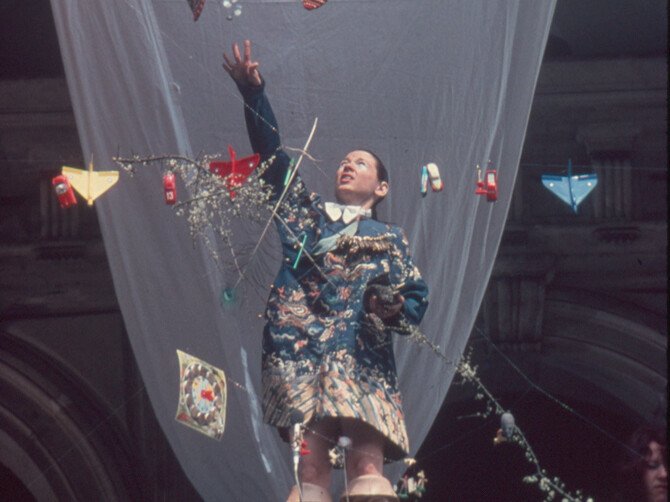
A few days before the opening, Girouard and three others performed her opulent, relaxed, colorful piece called "Pinwheel", which was preserved in the exhibition as a color videotape and cloth canopy sculpture. The piece related to Girouard's "Costumed Portrait" series; to her concern with role-playing, transformation, and their relationship to place; and to her interest in food as art -- and as adjunct to art and life. —Lucy R. Lippard
"I've always thought of the audience as witnesses. They see my self-image, and at the same time they're having the mystery and myth of video taken away. I think the tapes reveal a lot about my attitude to the performer and the experience of performing. I don't think it should be a scary experience." —Tina Girouard
In New York, the "Cajun crowd" is the life of the party; this month they are stirring things up back home with this New Orleans show of Five from Louisiana... —Barbara Rose
Tina Girouard: Paintings, Prints and Drawings, Elmhurst Park Gallery, Lafayette, LA
1980
Holly Solomon Gallery, New York, NY
Works on Fabric and Paper, Holly Solomon Editions, New York, NY
Street Sights, Institute of Contemporary Art, University of Pennseylvania, Philadelphia, PA
1979
Even-Odd, window installation, Forum Stadpark, Graz, Austria
Gallery Alexandra Monett, Brussels, Belgium
1978
Revival, The Clocktower (Institute for Art and Urban Resources), New York, NY
Metal, Holly Solomon Gallery, New York, NY
War Play Work Rest, Holly Solomon Gallery, New York, NY
1976
Video Installation, Anthology Film Archives, New York, NY
Stencil Sets, Holly Solomon Gallery, New York, NY
1975
Drawings for Video (with Richard Landry), 112 Greene Street, NY
Drawings, Scores, Histories, Vehicle Art Inc., Montreal, Canada
Color Photos and Video, Media Gallery, Alfred, NY
Memphis Breeze, Memphis Academy of Arts, Memphis, TN
Flags, 112 Greene Street, New York, NY
1974
Sky Above Earth Below, Saint Cloud State Gollege, Saint Cloud, MN
1973
Lay on Lie-No, University Gallery, Lafayette, LA
Patterns, 112 Greene Street, New York, NY
1972
Air Space State, Floor Space Stage, Sound Space Stage, 112 Greene Street, New York, NY
1971
Hung House Installation, 112 Greene Street, New York, NY
1968
University of Southwestern Louisiana, Lafayette, LA
Group Exhibitions
2025
Looking Back: White Columns Annual, White Columns, NY, group exhibition curated by Elisabeth Kley
2024
Mama's in the Kitchen, group exhibition at Anat Ebgi, New York, NY
The First Taste, Anat Ebgi, New York, NY
A Walk on the Wild Side: ‘70s New York in the Norman E. Fisher Collection, MOCA Jacksonville, Jacksonville, FL
2022
Fire, Figure, Fantasy, Institute of Contemporary Art Miami, Miami, FL
2020
Good Company: Pt. 1, Anat Ebgi, Los Angeles, CA
Garden of Time: Textiles as Nature Poem, Mendes Wood DM, São Paulo, BR
Videotapes. Early Video Art (1965-76), National Gallery of Art, Warsaw, Poland
2019-2020
Pattern & Decoration: Ornament as Promise, travelling exhibition: Ludwig Museum, Budapest, Hungary; museum moderner kunst stiftung ludwig wien, Vienna, Austria; Ludwig Forum Aachen, Germany
2019
With Pleasure: Pattern and Decoration in American Art 1972–1985, MoCA, Los Angeles, CA
Pattern, Crime & Decoration, travelling exhibition: Le Consortium, Dijon, France; Musée d'Art Moderne et Contemporain, Geneva, Switzerland
2017
Artist Run New York: The Seventies, Jean-Paul Najar Foundation, Dubai, UAE
2014
Horray for Hollywood, Mixed Greens Gallery, New York City, NY
2013
FOOD 1971/2013 - A tribute to Food Restaurant with Carol Goodden & Tina Girouard, Frieze Art Fair, New York, NY
Gordon Matta-Clark: Gordon Matta-Clark, Suzanne Harris, Tina Girouard: The 112 Greene Street Years, Rhona Hoffman Gallery, Chicago, IL
2011
Patterns and Prototypes: Tina Girouard & Robert Gordy, curated by Dan Cameron, Contemporary Arts Center, New Orleans, LA
112 Greene Street, The Early Years: 1970-1974, David Zwirner, New York, NY
1983
Drive-In Disco (installation in collaboration with Richard Landry), New Orleans Contemporary Art Center, New Orleans, LA
1981
Alternatives in Retrospect, New Museum of Contemporary Art, New York City, NY
Tangeman Fine Arts Gallery, University of Cincinnati, Cincinnati, OH
Inner/Urban, First Street Forum, St. Louis, MO
The Decoration Image, McIntosh/Drysdale Gallery, Washington, D.C.
1980
Drawings: The Pluralist Decade, Institute of Contemporary Art University of Pennsylvania, Philadelphia, PA
Fabric into Art, Amelie A. Wallace Gallery, S.U.N.Y. College at Old Westbury, New York, NY
Decoration, San Francisco Art Institute, San Francisco, CA
A Decade of Women's Performance Art, Contemporary Arts Center, New Orleans, LA
Dekor, Manheimer, Kunstverein, Mannheim, Germany; Amerika Haus, Berlin, Germany; Museum of Modern Art, Oxford, England
Les Nouveaux Fauves—Die Neuen Wilden, Neue Galerie/Sammlung Ludwig, Aachen, Germany
Greenberg Gallery, St. Louis, MO
1979
Pattern Painting/Decoration Art, Galerie Krinzinger, Innsbruck, Austria; Galerie Modern Art, Vienna, Austria
Clothing Constructions, Los Angeles Institute of Contemporary Art, Los Angeles, CA
Patterns +, Dayton Art Institute, Dayton, OH
Patterning and Decoration on Paper, The Mayor Gallery, London; Galerie Habermann, Cologne, Germany
Patterning, Palais des Beaux Arts, Brussels, Belgium
Patterning, Palais des Beaux Arts, Brussels
1978
Painting and Sculpture Today 1978, Indianapolis Museum of Art, Indianapolis, IN
Preview (Part of Gallery Opening Installation), Wade Gallery, Washington, D.C.
Surrogates/Self-Portraits, Holly Solomon Gallery, New York, NY
1977
Five From Louisiana, New Orleans Museum of Art, New Orleans, LA
Pattern Painting, Institute for Art and Urban Resources at P.S.1, Long Island City, New York, NY
Art Works on Paper, Weatherspoon Art Gallery, University of North Carolina, Greensboro, NC
Artist's Sets and Costumes, Philadelphia College of Art, Philadelphia, PA
Projects of the Seventies, P.S.1, New York, NY
1976
Purchase Show, Art Museum of South Texas, Corpus Christi, TX
Self-Portraits, Fine Arts Building, New York, NY
Non-Collectible Art from the Collection of Holly and Horace Solomon, Sarah Lawrence College Art Gallery, Bronxville, New York, NY; St. Lawrence University, Canton, New York, NY; Williams College, Williamstown, MA
Performances/Objects, Holly Solomon Gallery, New York, NY
New Work/New York, California State University, Los Angeles, CA
Rooms, P.S.1, New York, NY
Style and Process, Fine Arts Building, New York, NY
1974
Group Show, Holly Solomon Gallery, New York, NY
Anarchitecture, 112 Greene Street, New York, NY
Works Words, The Clocktower, New York, NY
Video Works, Leo Castelli Gallery, New York, NY
1973
Lie-No, 112 Greene Street, New York, NY
Dissolve, New York Cultural Center, New York, NY
1972
Oleo, 112 Greene Street, New York, NY
1970
Swept House, Brooklyn Bridge Event, New York, NY
1969
Special Effects, Loveladies, New Jersey
Special Projects and Performances
2018
'Mardi Gras Suites and Quartets' 1974/2018, Acadiana Center for the Arts, LaFayette, LA
1981
Other Realities—Installations for Performance (Performance 2C3TS), Contemporary Arts Museum, Houston, TX
1980
A Few, Dilworth Plaza, City Hall, Philadelphia, PA
1979
YAYA, Zagreb, Yugoslavia
W.A.W.A. (Worker Aristocrat Witness Ancient), Palais des Beaux-Arts, Brussels, Belgium
1978
Beached (with Creative Time Inc.), Battery City Landfill, New York, NY
Mass Transit Strosz-Zeit, Graz, Austria
Wedding is Black and White, Internationales Performance Festival, Vienna, Austria
Spread, Museum of Contemporary Art, Chicago, IL
1977
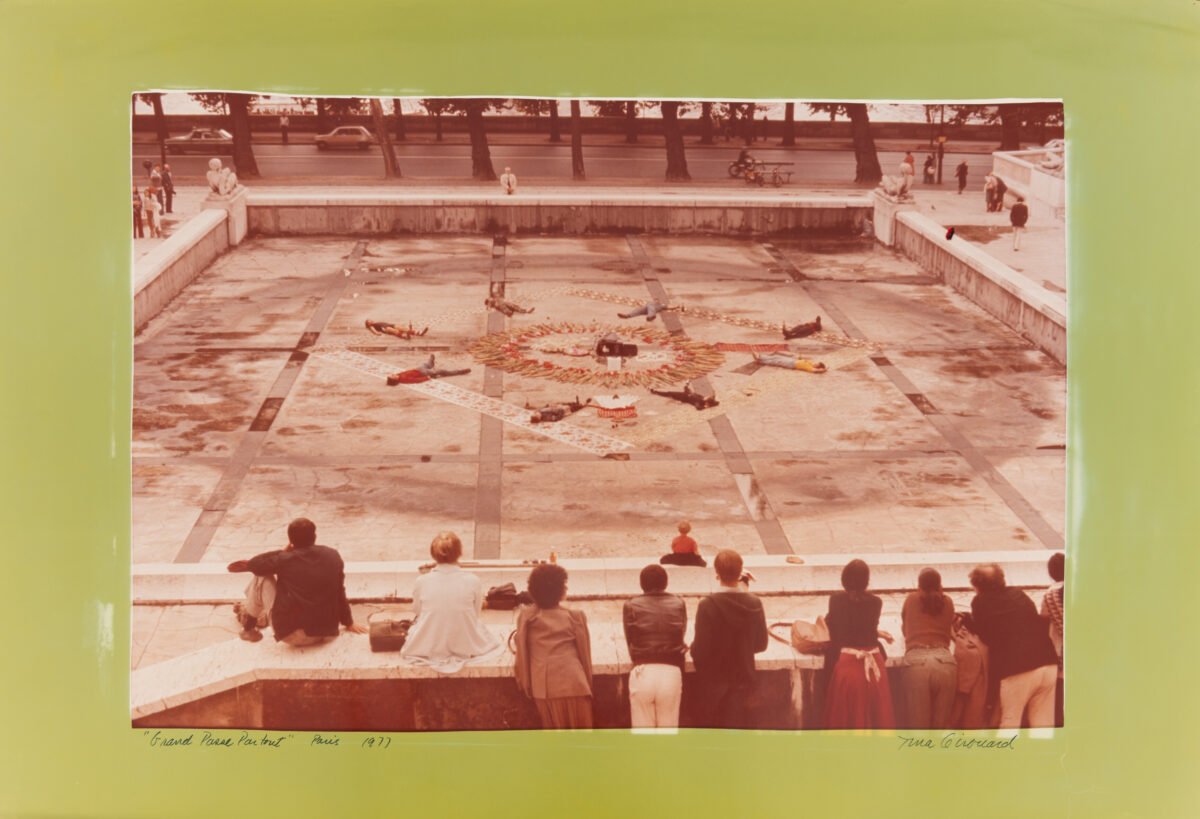
Petite Passe Partout, Grand Passe Partout, Paris Biennale '77, Paris, France
Pinwheel, New Orleans Museum of Art, New Orleans, LA


![This image depicts an artwork by Tina Girouard titled "Swept House (New York)." This artwork was created in 1971 and measures Unframed 20 ¹⁄₂" x 29 ⁷⁄₈" [HxW] (52.07 x 75.9 cm). Its medium is Chromogenic print.](https://anatebgi.com/wp-content/uploads/2024/10/Tina-Girouard_TG1122_1728581843.jpg)


![This image depicts an artwork by Tina Girouard titled "Red Lot." This artwork was created in 1971 and measures Installed 105 ¹⁄₂" x 108" [HxW] (267.97 x 274.32 cm). Its medium is Linoleum.](https://anatebgi.com/wp-content/uploads/2025/07/Tina-Girouard_TG1063_1752782739.jpg)


![This image depicts an artwork by Tina Girouard titled "Walls Wallpaper II." This artwork was created in 1974 and measures Dimensions variable
Frame 37" x 30" x 1 ¹⁄₂" [HxWxD] (93.98 x 76.2 x 3.81 cm)
Wallpaper 72 ¹⁄₂" x 70" [HxW] (184.15 x 177.8 cm). Its medium is Wallpaper mounted on muslin cheesecloth, and pencil, crayon, and wallpaper collage on paper.](https://anatebgi.com/wp-content/uploads/2025/07/Tina-Girouard_TG1106_1752783466.jpg)
![This image depicts an artwork by Tina Girouard titled "Foliage." This artwork was created in 1973 and measures 71 ⁵⁄₈" x 71 ⁵⁄₈" [HxW] (181.94 x 181.94 cm). Its medium is Wallpaper, framed.](https://anatebgi.com/wp-content/uploads/2025/07/Tina-Girouard_TG1141_1752782670.jpg)


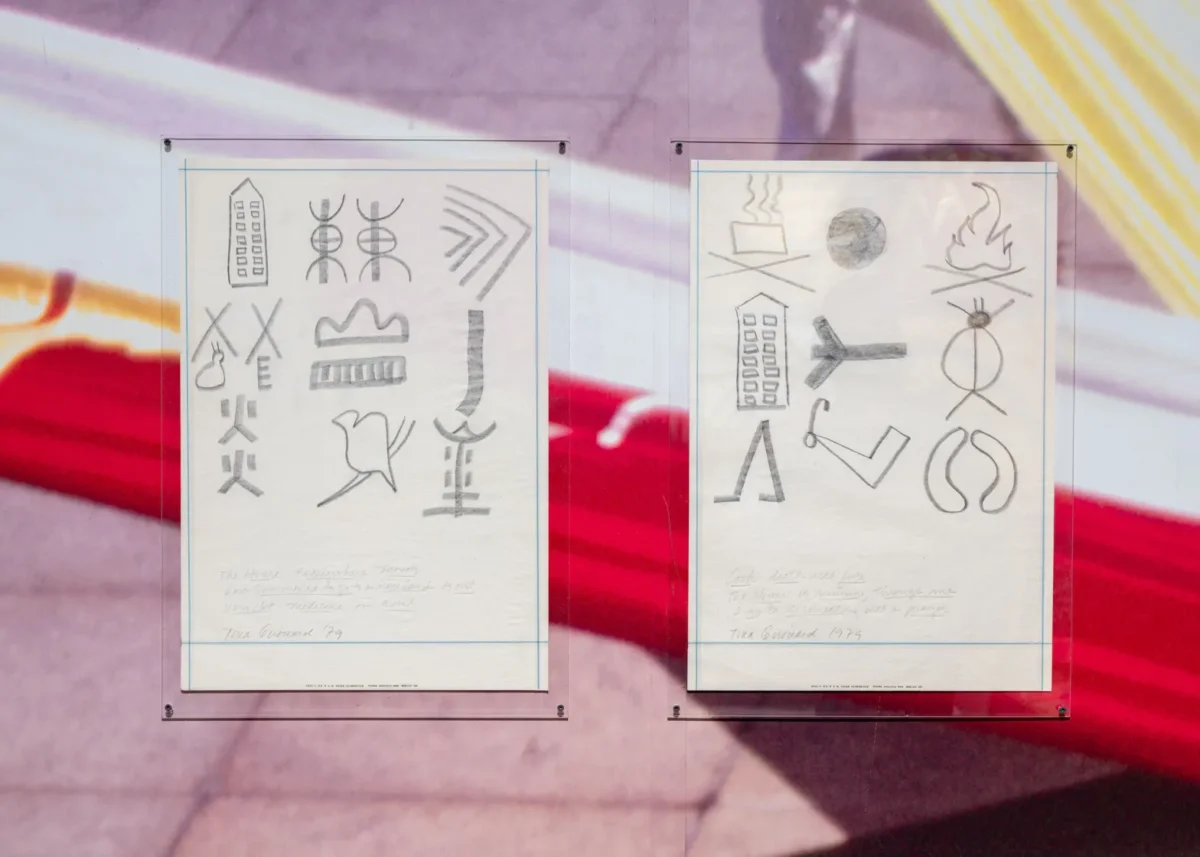
![This image depicts an artwork by Tina Girouard titled "Sound Loop From Time And Distance 1970." This artwork was created in 1974 and measures Framed 21" x 26" x 1 ¹⁄₂" [HxWxD] (53.34 x 66.04 x 3.81 cm)Unframed 17 ¹⁄₂" x 22" [HxW] (44.45 x 55.88 cm). Its medium is Graphite on graph paper.](https://anatebgi.com/wp-content/uploads/2024/10/Tina-Girouard_TG1080_1728581887.jpg)
![This image depicts an artwork by Tina Girouard titled "Live Body Beat For 32 People." This artwork was created in 1974 and measures Framed 21" x 26" x 1 ¹⁄₂" [HxWxD] (53.34 x 66.04 x 3.81 cm)Unframed 17 ¹⁄₂" x 22" [HxW] (44.45 x 55.88 cm). Its medium is Graphite on graph paper.](https://anatebgi.com/wp-content/uploads/2024/10/Tina-Girouard_TG1079_1728581862.jpg)
![This image depicts an artwork by Tina Girouard titled "Activities For Video Loop From Time And Distance '70." This artwork was created in 1974 and measures Framed 21" x 26" x 1 ¹⁄₂" [HxWxD] (53.34 x 66.04 x 3.81 cm)Unframed 17 ¹⁄₂" x 22" [HxW] (44.45 x 55.88 cm). Its medium is not known.](https://anatebgi.com/wp-content/uploads/2024/10/Tina-Girouard_TG1133_1728581831.jpg)


![This image depicts an artwork by Tina Girouard titled "Visions (New York)." This artwork was created in 1977 and measures Unframed 20 ¹⁄₈" x 30" [HxW] (51.13 x 76.2 cm). Its medium is Chromogenic print.](https://anatebgi.com/wp-content/uploads/2024/10/Tina-Girouard_TG1117_1728581838.jpg)
![This image depicts an artwork by Tina Girouard titled "Grand Passe Partout (Paris)." This artwork was created in 1977 and measures Unframed 20 ¹⁄₂" x 30" [HxW] (52.07 x 76.2 cm). Its medium is Chromogenic print.](https://anatebgi.com/wp-content/uploads/2024/10/Tina-Girouard_TG1115_1728581906.jpg)
![This image depicts an artwork by Tina Girouard titled "Pinwheel." This artwork was created in 1977 and measures Unframed 20" x 30" [HxW] (50.8 x 76.2 cm). Its medium is Chromogenic print.](https://anatebgi.com/wp-content/uploads/2024/10/Tina-Girouard_TG1120_1728581845.jpg)




![This image depicts an artwork by Tina Girouard titled "Untitled." This artwork was created in 1982 and measures 49" x 74" [HxW] (124.46 x 187.96 cm). Its medium is Acrylic and alkyd on canvas.](https://anatebgi.com/wp-content/uploads/2025/07/Tina-Girouard_TG1142_1752782675.jpg)


![This image depicts an artwork by Tina Girouard titled "Chalice Mango." This artwork was created in Undated (1990s) and measures 69" x 42" [HxW] (175.26 x 106.68 cm). Its medium is Hand sewn glass beads, sequins, acrylic and other media on canvas.](https://anatebgi.com/wp-content/uploads/2025/07/Tina-Girouard_TG1047_1752782772.jpg)


![This image depicts an artwork by Tina Girouard titled "Flora." This artwork was created in 1992 and measures 70" x 114" [HxW] (177.8 x 289.56 cm). Its medium is Hand sewn glass beads, sequins, acrylic and other media on canvas.](https://anatebgi.com/wp-content/uploads/2025/07/Tina-Girouard_TG1024_1752782781.jpg)
![This image depicts an artwork by Tina Girouard titled "1992 Immigration - Migration 1492." This artwork was created in 1992 and measures 57" x 88" [HxW] (144.78 x 223.52 cm). Its medium is Hand sewn glass beads, sequins, acrylic and other media on canvas.](https://anatebgi.com/wp-content/uploads/2025/07/Tina-Girouard_TG1099_1752782915.jpg)

![This image depicts an artwork by Tina Girouard titled "Echinacea." This artwork was created in 2001 and measures 44" x 25" [HxW] (111.76 x 63.5 cm). Its medium is Hand sewn glass beads, sequins, acrylic and other media on canvas.](https://anatebgi.com/wp-content/uploads/2025/07/Tina-Girouard_TG1049_1752782747.jpg)