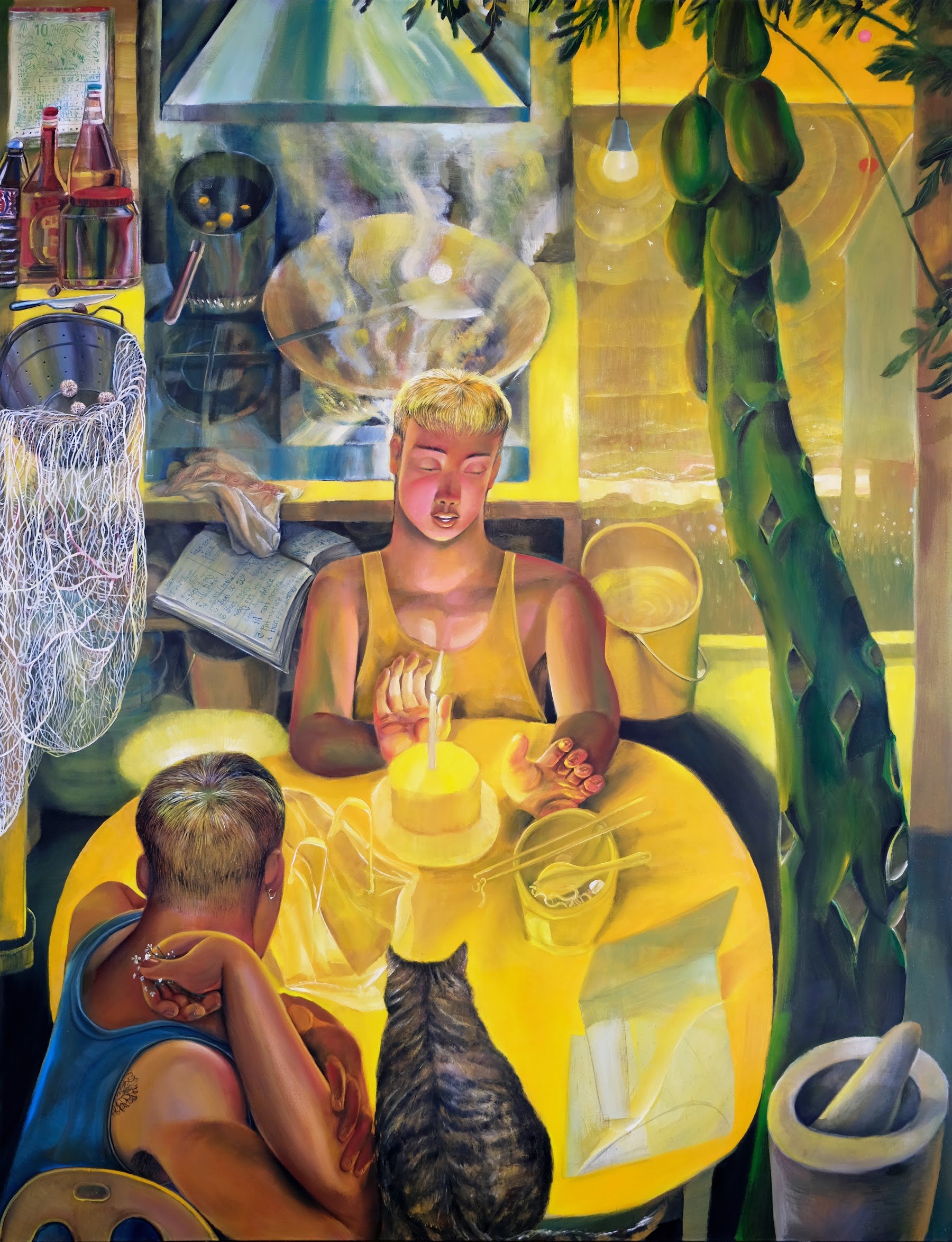
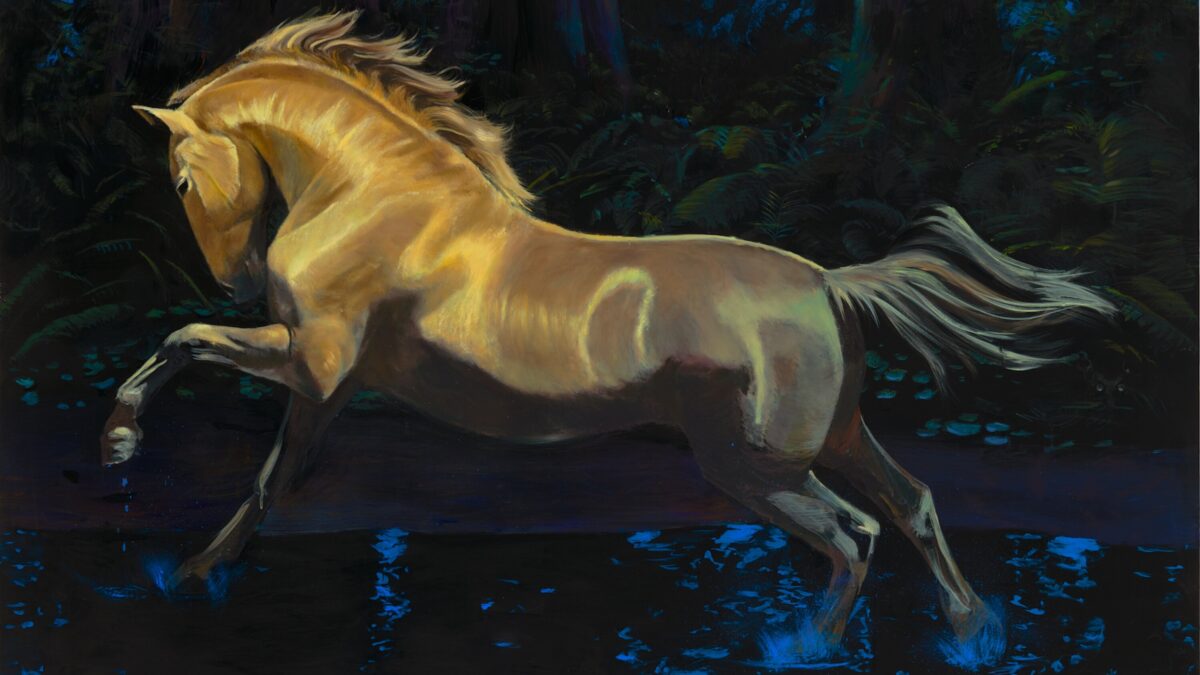
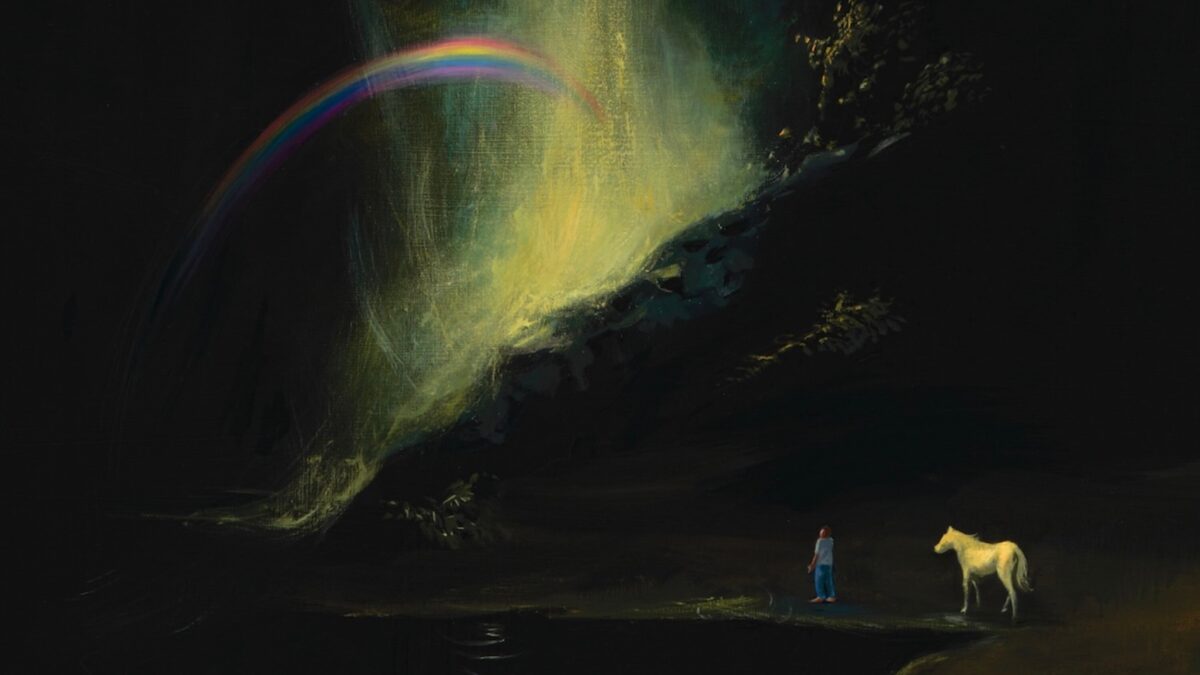
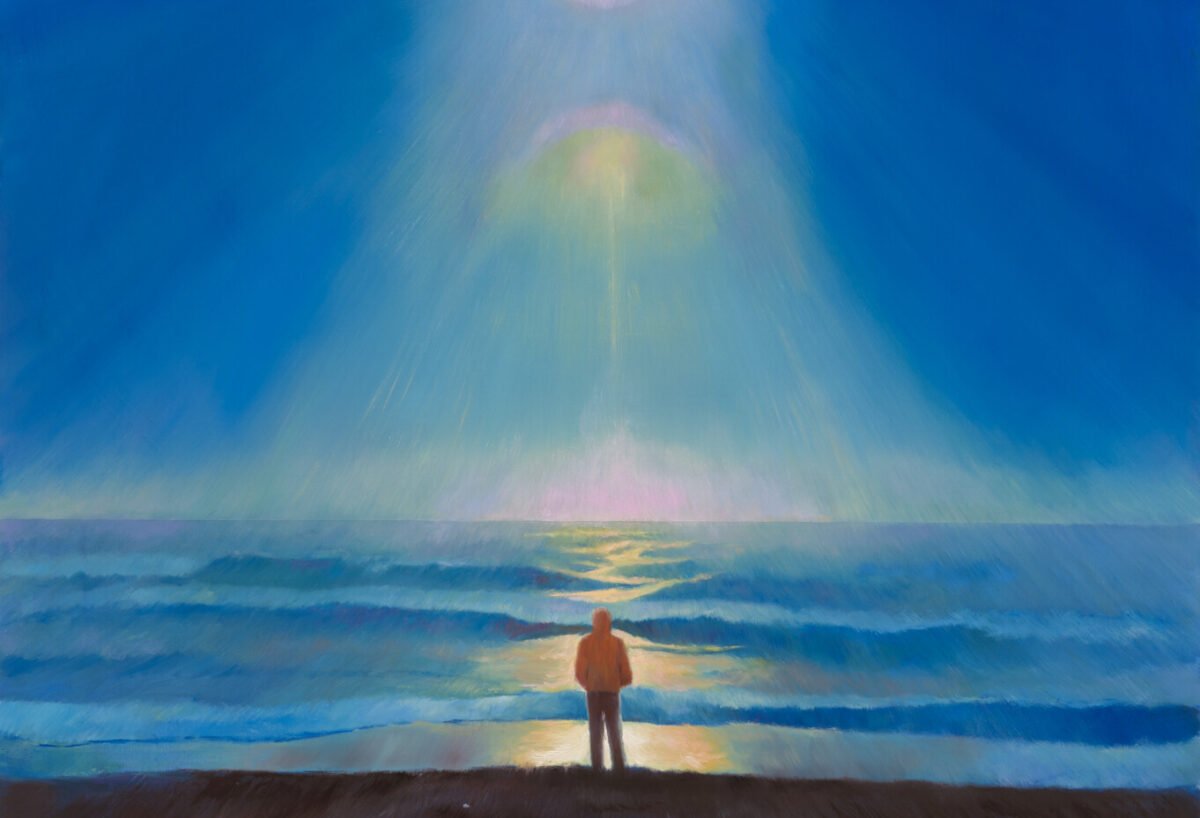
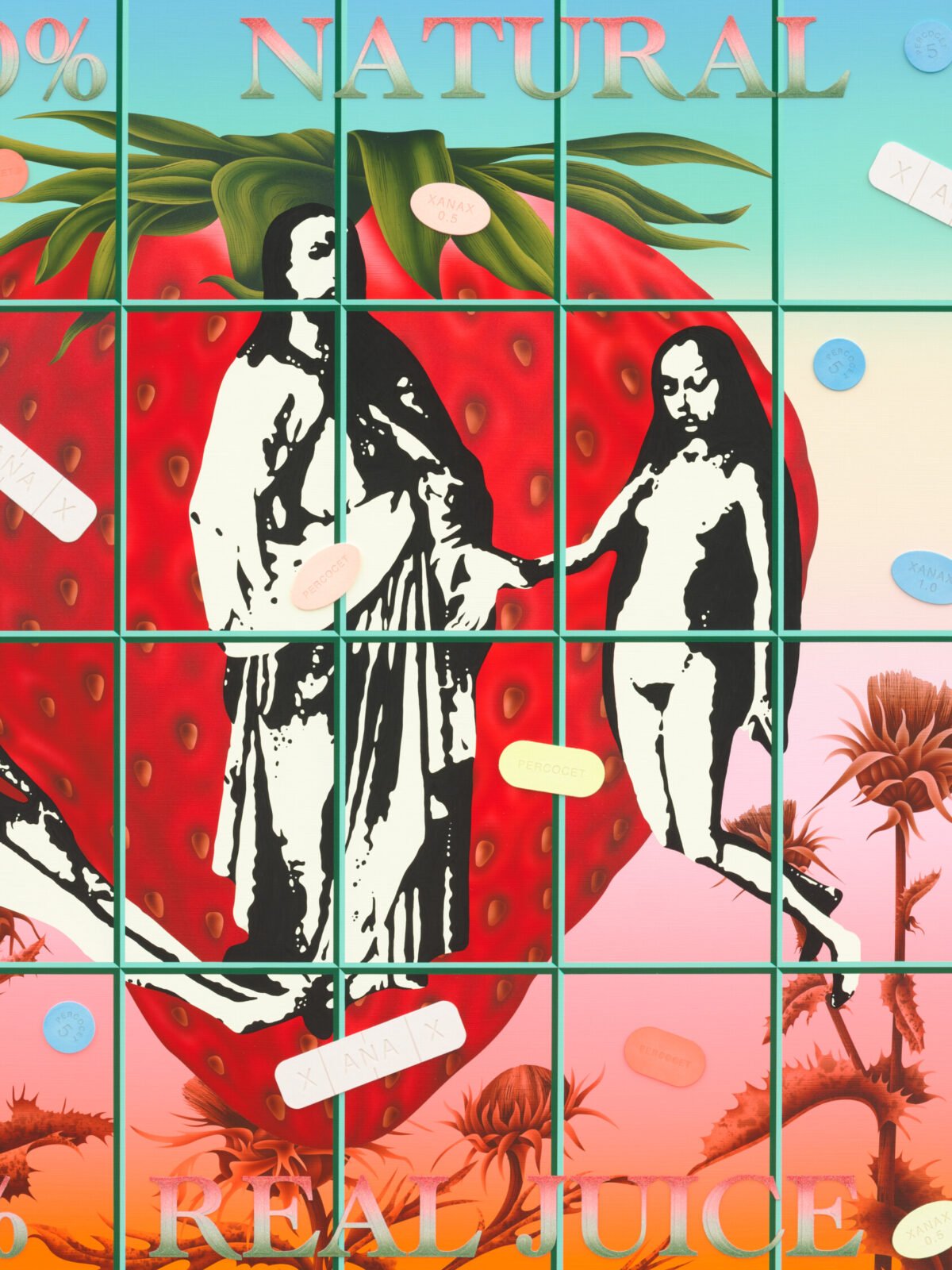
Caleb Hahne Quintana A River Dividing Presence and Absence, 2025 (Detail)
About
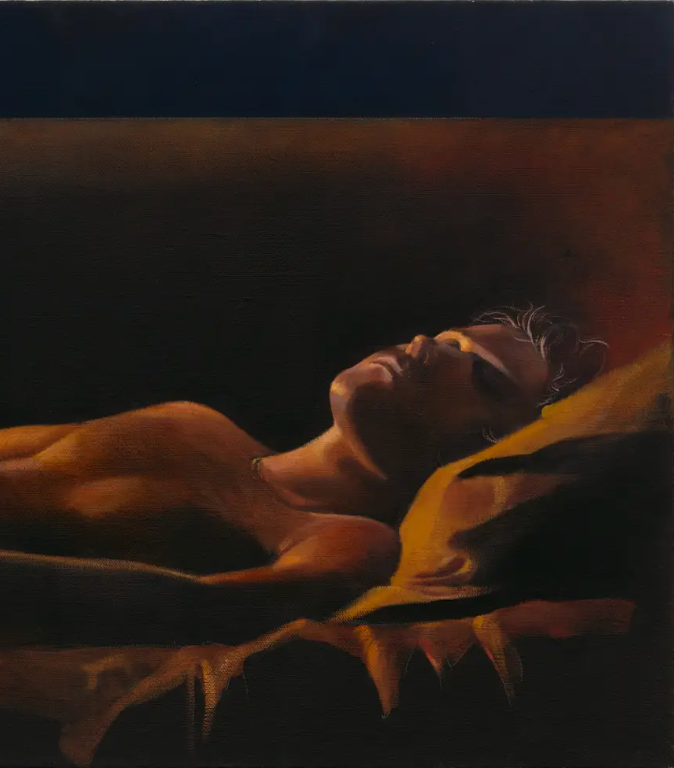
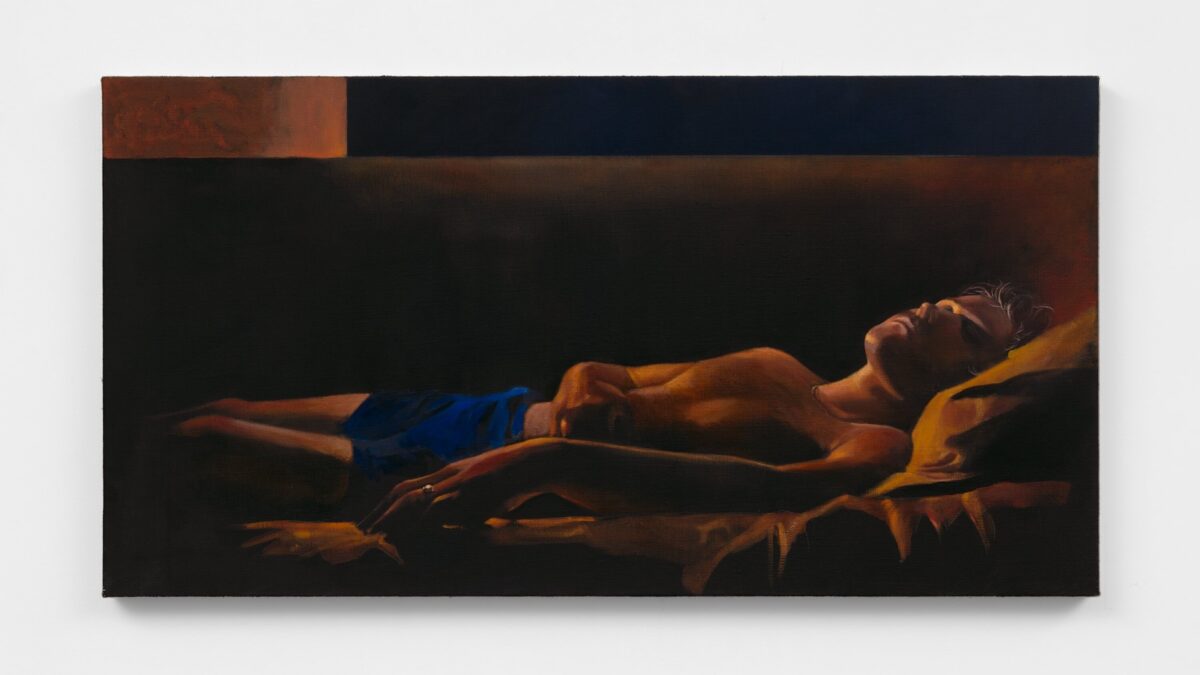
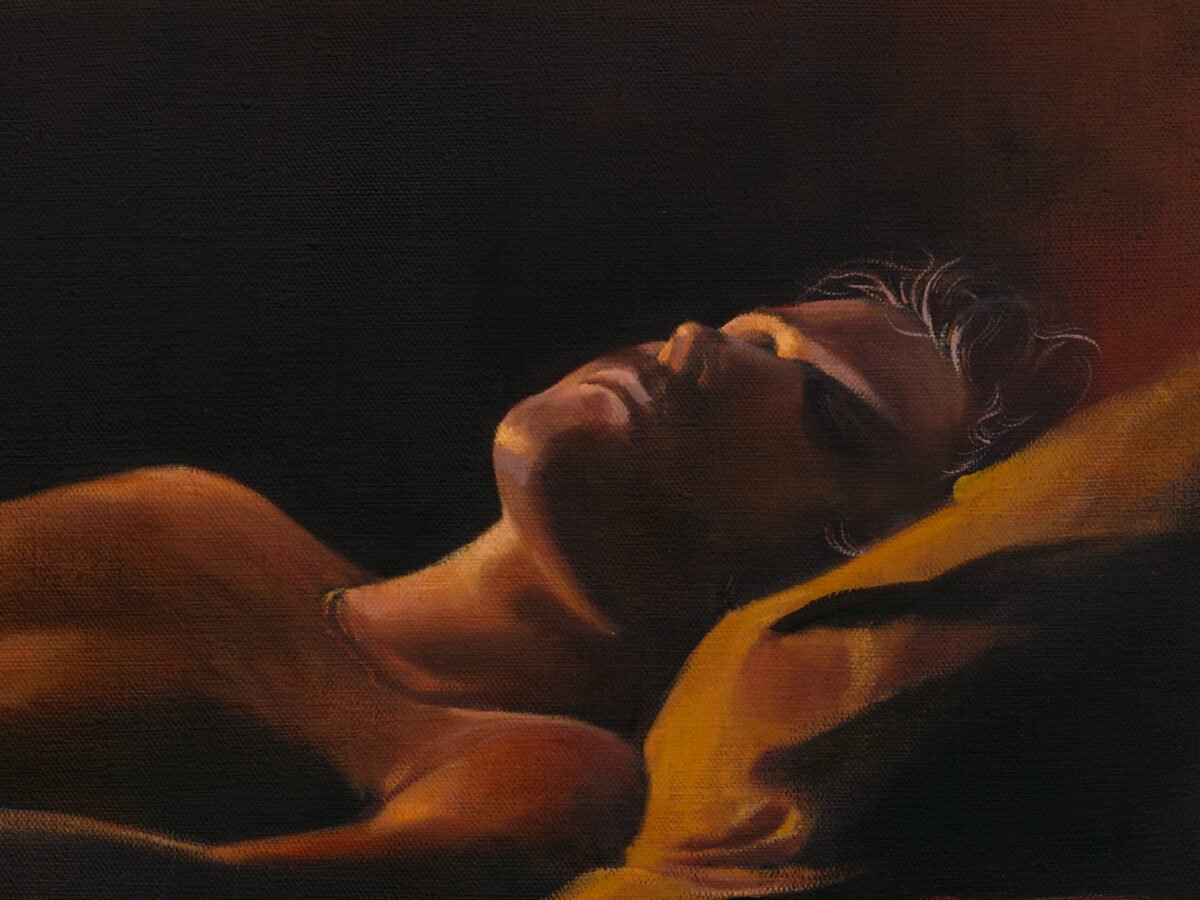
Led by a stoic introspection and tenderness born of intimacy, Caleb Hahne Quintana’s paintings draw from his upbringing in the American Southwest and his Mexican heritage to create emotionally charged portraits, landscapes, and still lives. His subjects frequently include young men riding horses, wrestling, swimming, or more quiet moments with figures sitting in a window or sharing a cigarette. He begins with drawing—a step he describes as “liberating” and will often repeat subjects across media including, colored pencil, ink, and gouache before moving to “the more arduous act of painting.” Closely cropped or wide-angle perspectives draw viewers in to Hahne Quintana’s observations about the haziness of memory and boyhood. His meditative observations elevate the mundane to the profound and the overlooked to the monumental.
Caleb Hahne Quintana (b. 1993, Denver, CO) received a BFA in Fine Arts from Rocky Mountain College of Art and Design. His work has been exhibited in group exhibitions at museums including Strike Fast, Dance Lightly: Artists on Boxing at The Norton Museum of Art, West Palm Beach, FL and The FLAG Art Foundation, New York, NY; Fire Figure Fantasy at ICA Miami and Who Tells a Tale, Adds a Tail: Latin America and Contemporary Art at the Denver Art Museum.
Recent solo exhibitions include A Boy That Don’t Bleed, Anat Ebgi, New York, NY; albertz benda, Los Angeles, CA; The Earth, It Held Me, 1969 Gallery, New York, NY; and The Path From Sea to Sky, The Cabin, Los Angeles, CA. His work has also exhibited at Sean Kelly Gallery, Los Angeles and New York; Lyles & King, New York, NY; Alexander Berggruen, New York, NY; Kunstraum Potsdam, Germany; DELI Gallery, New York, NY; and OMR Gallery, Mexico City, MX. Hahne Quintana’s works are in the permanent collections of the Denver Art Museum, Denver, CO; the High Museum of Art, Atlanta, GA; X Museum, Beijing, China; and the Institute of Contemporary Art Miami (ICA Miami). Hahne Quintana lives and works in New York, NY.
Caleb Hahne Quintana The Record Keeper, 2025
Oil and acrylic on clayboard
Frame 14 ¹⁄₈ x 12 x ³⁄₄ inches / 35.89 x 30.48 x 1.91 cm
Artwork 7 x 5 inches / 17.78 x 12.7 cm
Caleb Hahne Quintana Gate, 2022
Gouache and colored pencil on paper
Framed 15" x 12" x 1 ¹⁄₂" [HxWxD] (38.1 x 30.48 x 3.81 cm); Unframed 12" x 9" [HxW] (30.48 x 22.86 cm)
Inventory #CHA1014
Caleb Hahne Quintana Black Beauty, 2022
Gouache and colored pencil on paper
Framed 17" x 14" x 1 ¹⁄₂" [HxWxD] (43.18 x 35.56 x 3.81 cm); Unframed 14" x 11" [HxW] (35.56 x 27.94 cm)
Inventory #CHA1020
But upon closer inspection, something deeper unfolds. Wherein lies the beauty of Hahne Quintana’s show. Each painting alone is intriguing and mysterious, but together they reveal a boy struggling with his sense of self. – Annabel Keenan
A Boy That Don’t Bleed: Caleb Hahne Quintana at Anat Ebgi
A Boy That Don’t Bleed marks a turn inward in Hahne Quintana’s practice with a new body of work exploreing the mysteries of selfhood and the unconscious.
Frieze New York Diary: sparring artists are boxing clever, Whitney gets set for almighty dick pic, and Bates mansion is reincarnated
" Highlights of the evening included a poetic choreographed joust between Caleb Hahne Quintana and Rogelio, which the judges deemed “fierce” on a series of 1980s ballroom scene-style flashcards."
Caleb Hahne Quintana | A West Palm Beach Show Spotlights the Beauty and Tragedy of Boxing
One morning, d’Humières, the director of the Norton, walked up to Caleb Hahne Quintana’s big painting of the knocked-out fighter. It reminded him, he said in an interview, of Édouard Manet’s “The Dead Toreador,” likely painted around 1864. —Joseph P. Treaster
The Norton’s New Boxing Exhibition Packs An Unexpected Punch
But some of the most memorable works in “Strike Fast” are from artists for whom I was unfamiliar—and that strip the sport of its braggadocio and machismo. The feeling of being on the losing end of a match is deeply felt in Caleb Hahne Quintana’s “How a Fall Can Make You Real,” which depicts a boxer flat on the mat, defeated under the harsh glare of a spotlight, in an eerie void where nothing else exists. —John Thomason
The Best New York Exhibitions this July | Mama’s in the Kitchen at Anat Ebgi
The show delves into the power that comes with domestic labor and care, acts that have often been rejected by modern culture. Each artist explores the power that comes with the domestic sphere, from cultural connections to community growth. Through mediums like epoxy clay bread sculptures and acrylic and oil narrative paintings, the exhibition offers a compelling glimpse into how each artist interprets the complexities of domestic life today. Throughout “Mama’s in the Kitchen,” each artist unapologetically represents their own visions of home and its empowering nature–viewers are met with dynamic and thought-provoking pieces at every turn. —Harriet Engelke
Caleb Hahne Quintana Can’t Live Without Country Music, Cowboy Boots and His Mechanical Pencil
Fresh off a six-week break from the studio that artists will know as essential for the post-exhibition comedown, Caleb Hahne Quintana is getting back to his daily routine. The Brooklyn-based artist opened his largest exhibition in Europe to date, A Salt of Two Seas, at Newchild Gallery in March. In the days and weeks since, Hahne Quintana has filled his cup consuming books, taking in exhibitions across New York, and finding renewed joy in cooking. Here, Caleb Hahne Quintana takes us through his recommendations during a day in the life. —Maria Vogel
Caleb Hahne Quintana on ‘The Salt of Two Seas’ at Newchild
"When I first moved to New York, my work was already very rooted in the southwestern landscape. People asked if I was going to start painting New York scenes. I guess as a painter I felt I had this duty as an observer and recorder to do that, but I realized pretty quickly that wasn’t my job. I'm not from here. I have no need to tell any of these stories because it's not who I am. Being from the Southwest, there's this affinity for a big city where you want to know what that's like, yet moving here made me much more aware and grateful for the abundance of the desert and the plains of the Southwest. It brought me closer to home in a way, and that's been a great gift of authenticity in terms of knowing who I am and who I'm not." —Caleb Hahne Quintana
Discover 6 Artists You Shouldn’t Miss at This Year’s Art Basel Miami Beach
Colorado-born, Brooklyn-based artist Caleb Hahne Quintana has generated significant buzz at Anat Ebgi’s booth this year following a string of recent acquisitions by the Denver Art Museum, the Institute of Contemporary Art Miami, and the High Museum of Art in Atlanta. Hahne Quintana draws from his Colorado upbringing and his Mexican heritage to create contemplative figurative paintings that spotlight intimate moments in his life. —Annabel Keenan
8 Art-World Insiders on What to See, Do, Eat, and Drink During Miami Art Week
At Anat Ebgi, two artists in particular I can’t wait to see at Art Basel for the first time are Caleb Hahne Quintana and Soumya Netrabile. —Maria Vogel
NYLON’s 10 Painters to Watch | Caleb Hahne Quintana
Part of Denver-born, New York-based painter Caleb Hahne Quintana’s practice is about reclaiming his Mexican identity. His exquisite, personal paintings, such as one of a hand brushing his mother’s amber hair, feel like getting brief access to someone else’s memory, only to find out it’s a dream. Much of his work takes place in the melancholic, yet hopeful light of dusk. —Sophia June
Caleb Hahne Quintana | Lago Algo presents ‘Chapter IV: History’
"Here, five artists come together whose works intersect in a journey through time, from prehistoric times to the Grand Story of today and tomorrow. Chapter IV showcases independent yet conceptually interconnected projects from five international artists: Abdelkader Benchamma (France, 1975), Simon Fujiwara (UK, 1982), Sabino Guisu (Mexico, 1986), Caleb Hahne Quintana (USA, 1993), and Guido van der Werve (Netherlands, 1977)." —Vogue MX
Greeting visitors to The Armory Show is a stunning painting by Caleb Hahne Quintana in Anat Ebgi’s booth. Featuring a boxer who has just been knocked out, the work is in a long, horizontal format that pulls the viewer in and places the athlete’s prostrate body at eye height. —Annabel Keenan
Caleb Hahne Quintana: migration and masculinity in Southwestern America
"Painting and language, I don’t think one is better than the other, and both must exist in harmony. I’ve always been better at the image, and it’s a challenge for me to write about my work. I want to be more poetic with my writing. I want to leave things more open-ended and less specific because I want it to be more relatable. What I try to achieve is this harmony of emotion, and a relatability to the painting and language." —Caleb Hahne Quintana
A Knockout Show on the Surprising Links Between Art and Boxing
Artists Caleb Hahne Quintana and Cheryl Pope, who were both amateur boxers, address the physicality inherent to the sport from their own experiences... —Eileen Kinsella
Often in his paintings, especially in AURORA, Caleb is creating paintings places he knows with the faces and memories he can't quite confirm is fantasy or fact. It's as if he is letting the memories ebb and flow like the tides, entering into his mind and then allowing them to overtake the story in the work. — Evan Pricco
AURORA at Anat Ebgi, Los Angeles invokes and subverts a sense of late Americana through pictures that are ‘of’ something identifiable but elude easy paraphrase. — Jonathan T.D. Neil
"My great-great-grandfather used to steal horses with Pancho Villa for the Mexican Revolution. All of that history disappears when I keep [only] Hahne. I'm sure that my great-great-grandfather didn't expect a half-Mexican, white kid painter to paint pictures about him in Brooklyn a hundred years later. But I just love that I can continue that legacy." —Caleb Hahne Quintana
Caleb Hahne Quintana: Artist in ‘Who tells a tale adds a tail’ at the Denver Art Museum
Watch Denver-area native Caleb Hahne Quintana discuss his artistic process, resulting in works that tell the stories of himself and his forebears. —Denver Art Museum
One Sun: Caleb Hahne’s Solo @ Rule Gallery, Denver
Focusing on ambiance rather than content, Hahne constructs a coherent body of intimate work in which the sun, as the metaphor of time, is subtly portrayed through a captivating shine on human skin. Combining such visual language with unusual formatting, Hahne places the viewer right beside his subjects, allowing him to share these special moments together and potentially identify with them. —Sasha Bogojev
"My current body of work involves the material engagement of found paper and objects, graphite, ballpoint pen, oil paint, and acetone along with other mixed medias." —Caleb Hahne Quintana